Start with how you live
Before looking at photos, think about what you actually do outside. Do you cook for crowds, read in the quiet, play with kids or host in the evening? The answer shapes the size, the surface and the features.
Write down your top three uses. They become the anchors of the plan, and everything else is a bonus.
Collect photos of outdoor spaces you like, and notice what they share. Often it is a color, a material or a feeling rather than a single feature, and that helps a designer capture your taste.
Dining and cooking
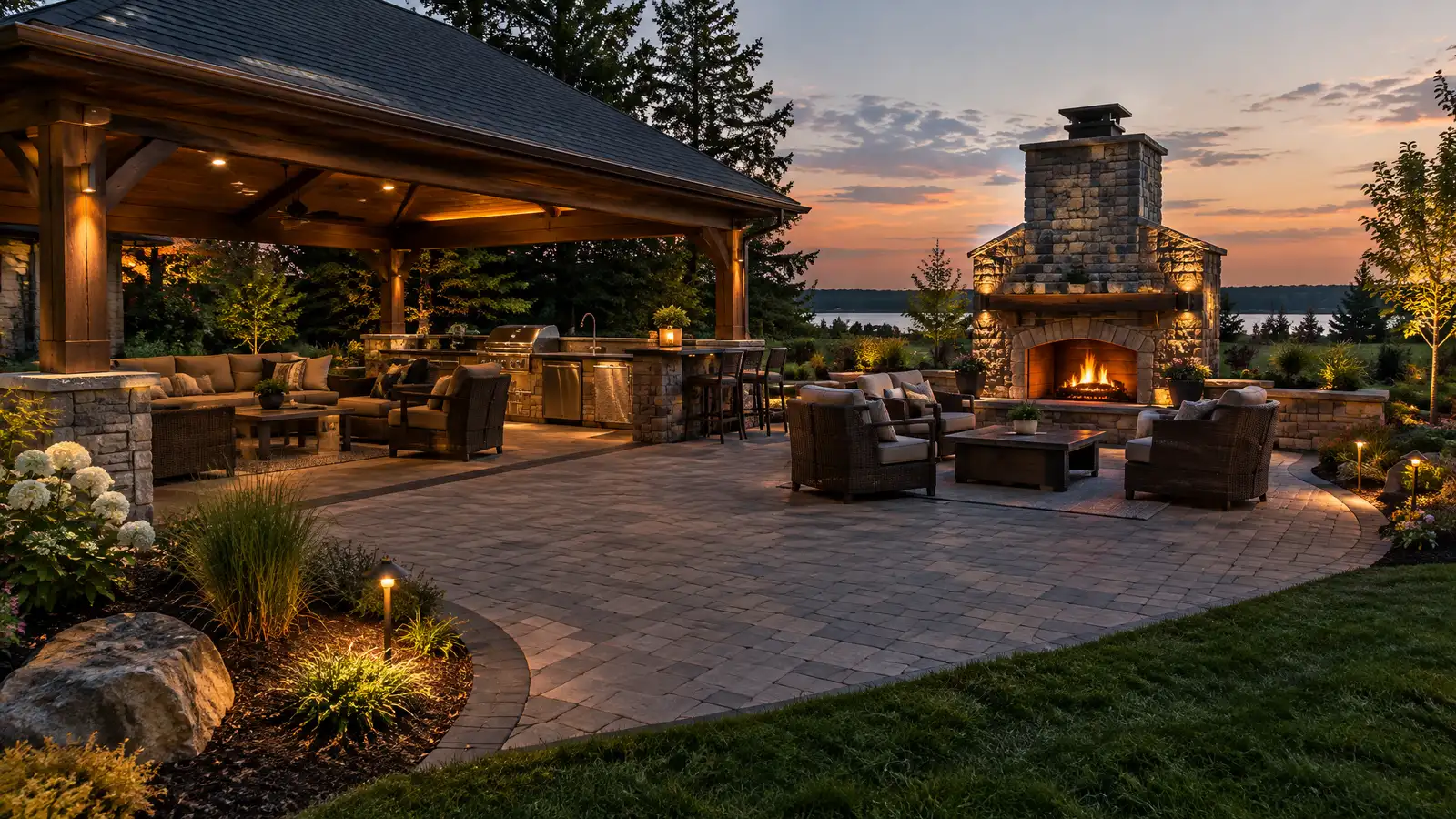
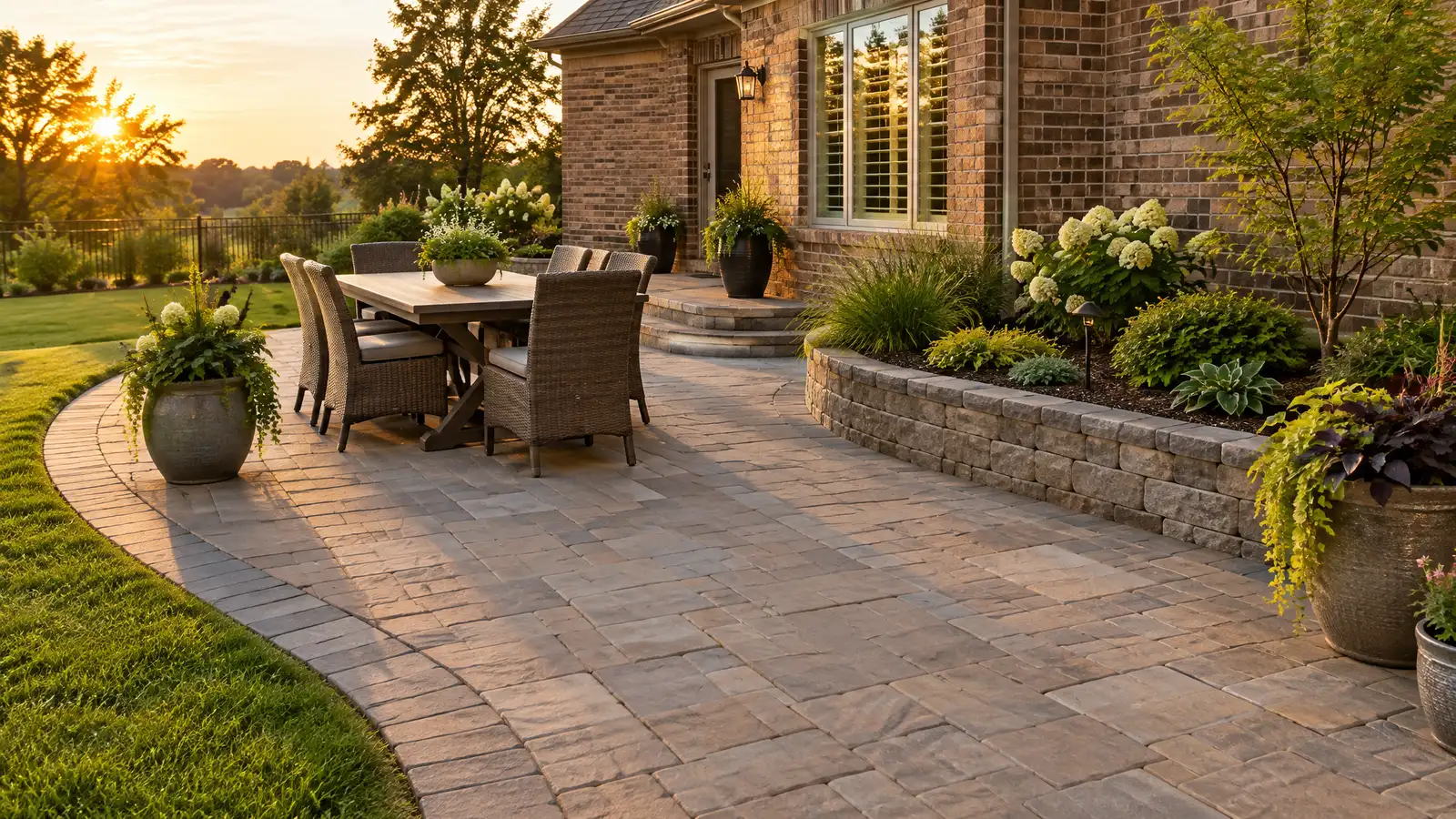
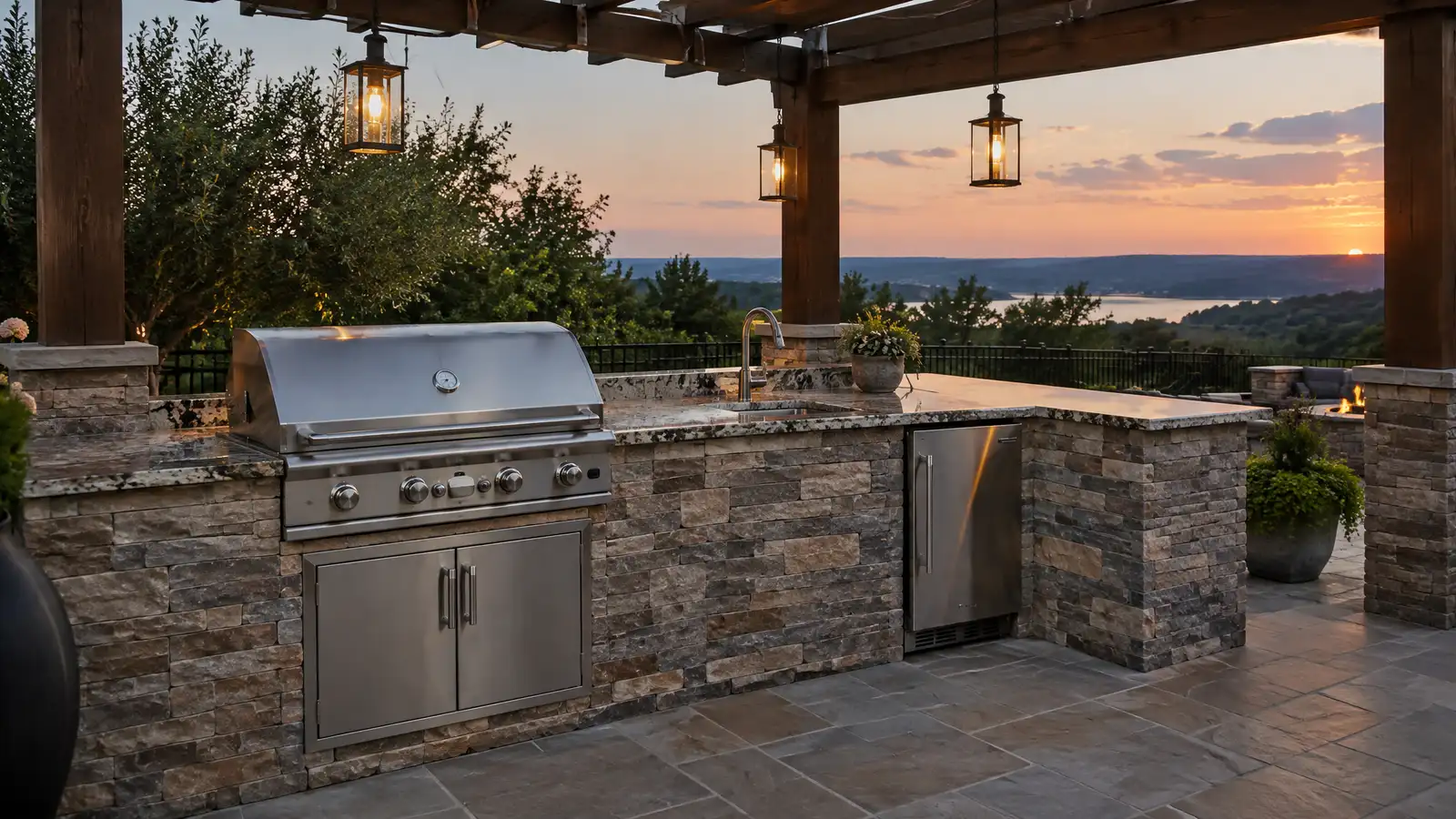
A dining patio near the kitchen door is the most used outdoor room for many families. Add a grill or a full outdoor kitchen, and a bar at the edge for guests who want to chat with the cook.
Shade, lighting and a flat, well-drained surface make meals comfortable for hours.
If you cook outdoors often, think about prep space and storage as much as the grill. A small counter and a closed cabinet make cooking feel easy instead of a chore.
Fire and gathering
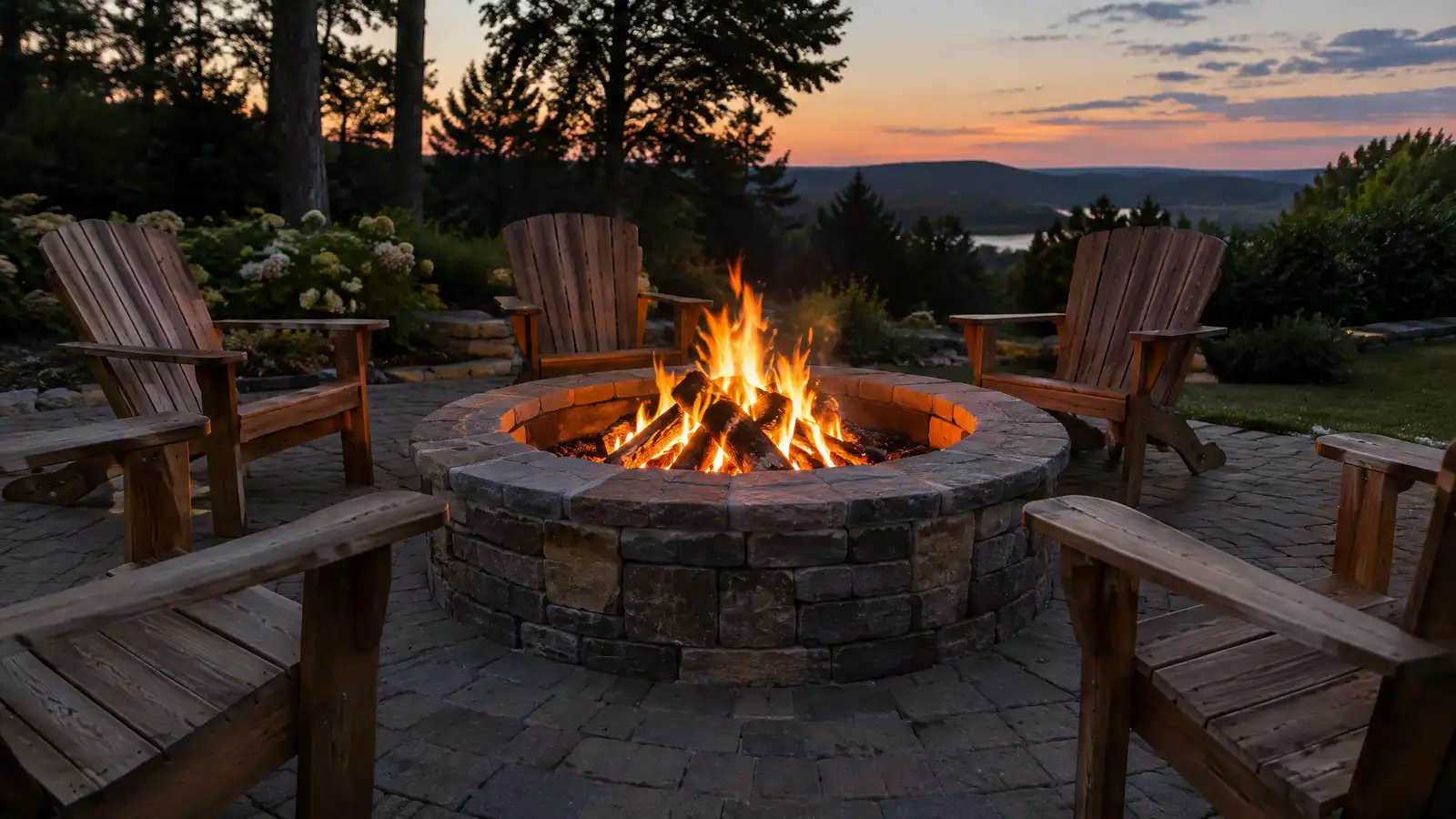
A fire pit or fireplace turns a patio into a place to linger. Seat walls, deep chairs and soft lights make a circle for conversation, and gas options start with a switch.
Allow space for seating and for walking around the fire safely.
Gas fire features are easy and clean, and wood fires have a smell and sound many people love. Sitting at a friend's fire pit is a good way to decide.
Shade and comfort
Pergolas, pavilions, covered patios and screens make the space usable in summer heat and light rain. Fans and heaters stretch the season at both ends.
Plants and trees add natural shade and privacy that structures cannot match.
A sunny patio can become comfortable with a single shade structure and a fan. Start with the biggest problem, and add comfort features as you learn how you use the space.
Plants, light and water
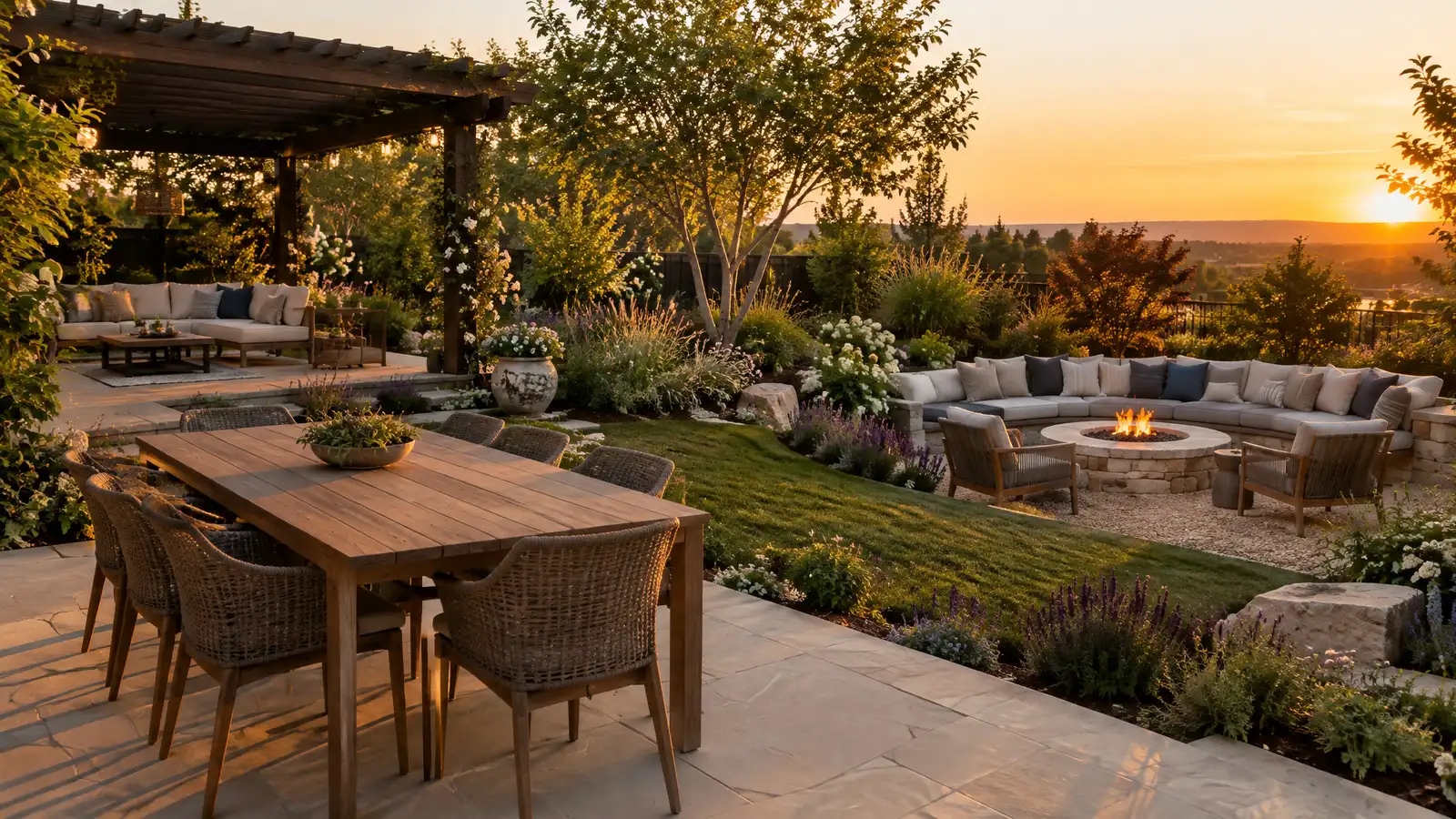
Layered planting softens hard surfaces, and soft lights extend the day. A water feature adds sound that hides street noise and makes the yard feel calm.
Small touches such as planters, a bubbling rock or string lights make a big difference.
Choose plants that suit your light, and place lights where they show off trees, walls and paths. Evening is when many patios come alive, so plan for it.
Build in phases
You do not have to do everything at once. A master plan lets you build the patio first and add the kitchen, shade or fire features later, with drains and conduit planned early.
Each phase should look finished by itself.
Ask for a master plan even if you build in stages. It prevents rework and helps each phase fit with the next.
Pick three ways you want to use the yard, design for those first and add the rest over time.