Water follows slope
A patio should slope gently away from the house, about a quarter inch per foot is common. Too little slope leaves puddles, and too much feels uncomfortable.
Look at where water goes after a heavy rain.
A long level can show slope on a finished patio. Place it on the surface, lift one end to center the bubble and measure the gap.
Downspouts and roofs
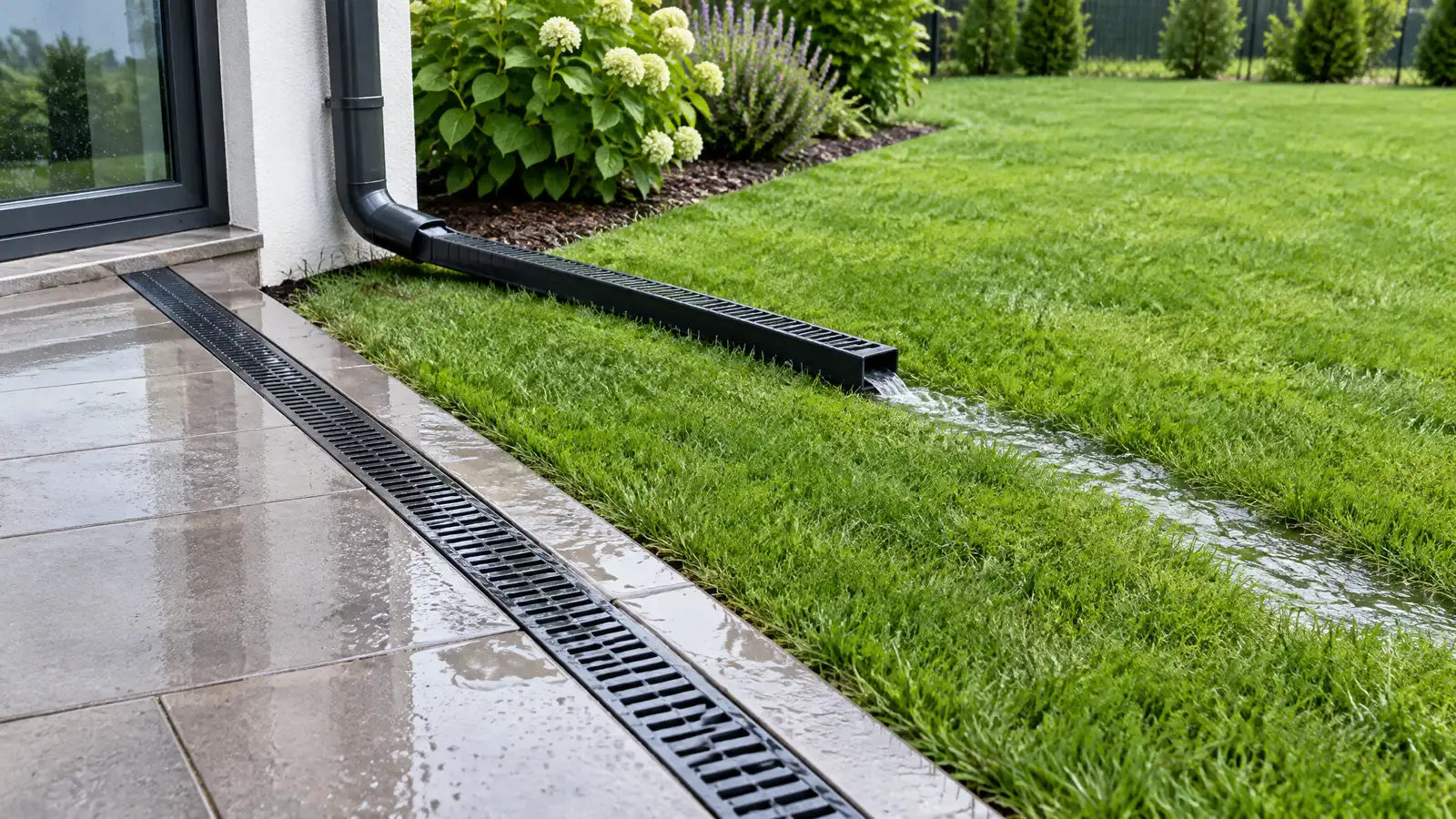
Roof water can overwhelm a patio edge. Extend downspouts or pipe them underground to a safe outlet.
Gutters that are clean and sized right help.
After storms, look at where downspouts empty and whether water runs toward the patio. Sometimes a simple extension solves the problem.
Drains
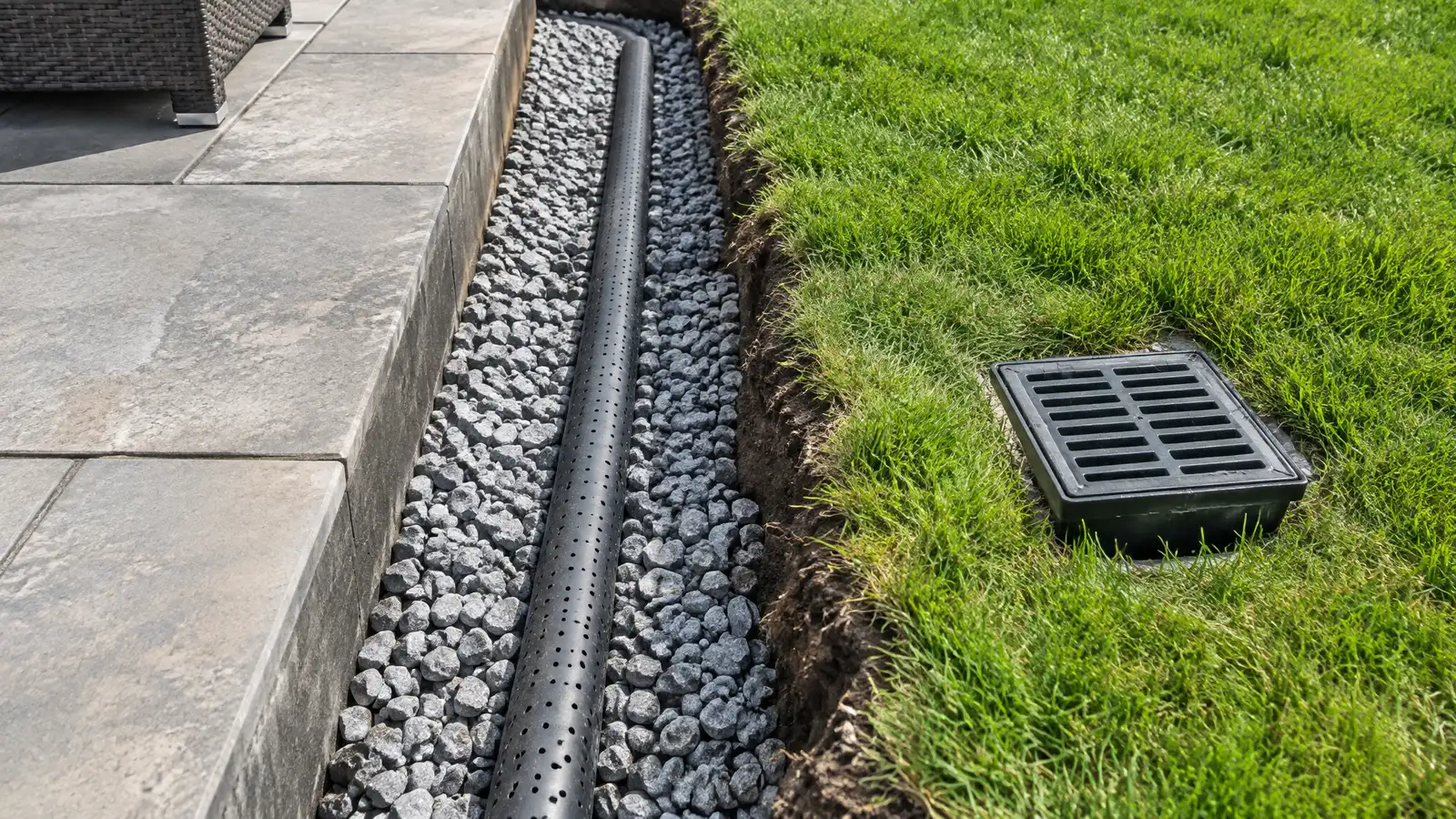
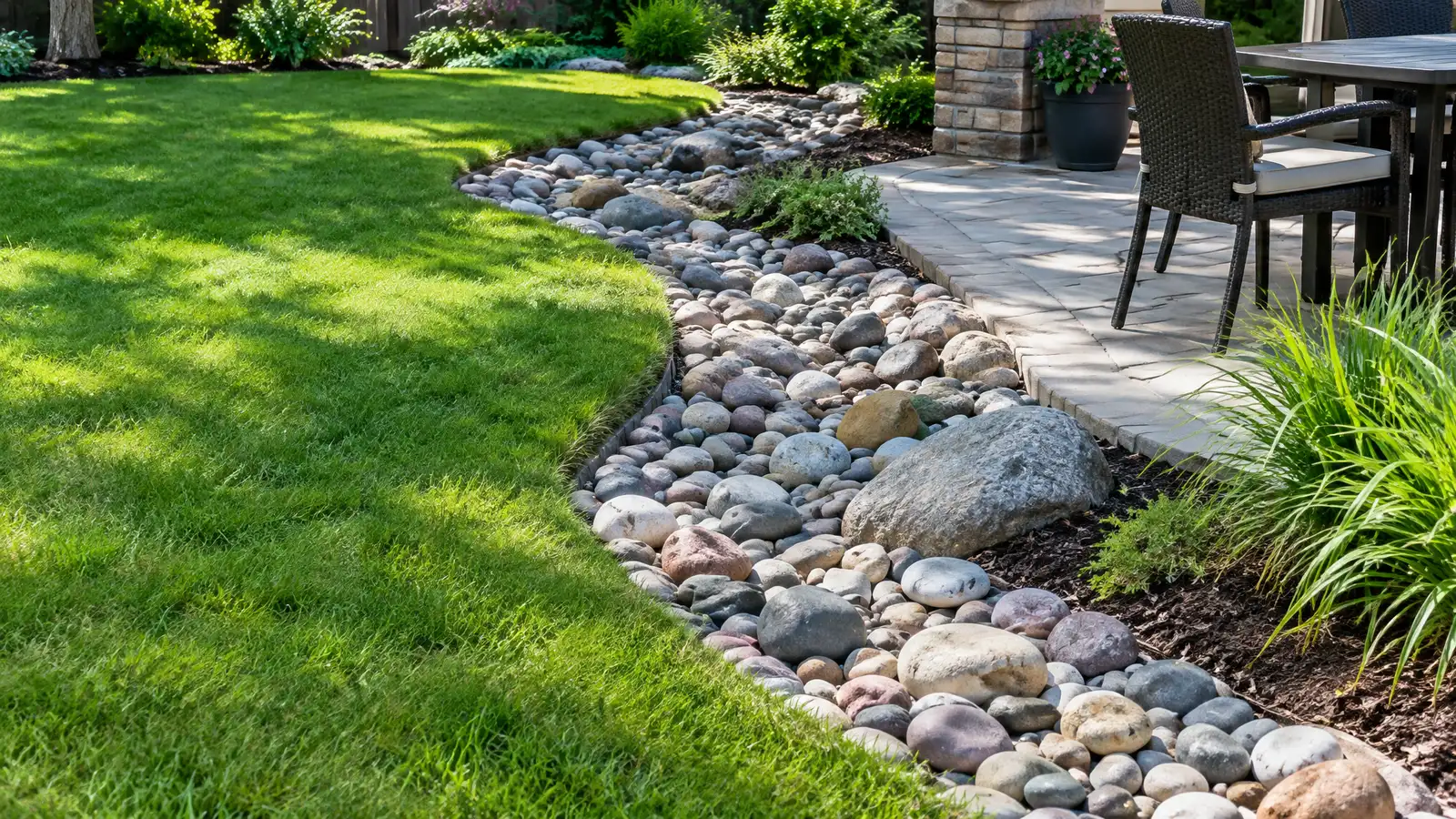
Channel drains, catch basins and French drains collect water and move it away. Each needs an outlet that works in heavy rain.
Place drains at low points and at doors.
Test a drain by running a hose into it and following the water. A drain that backs up needs cleaning or a better outlet.
The base matters
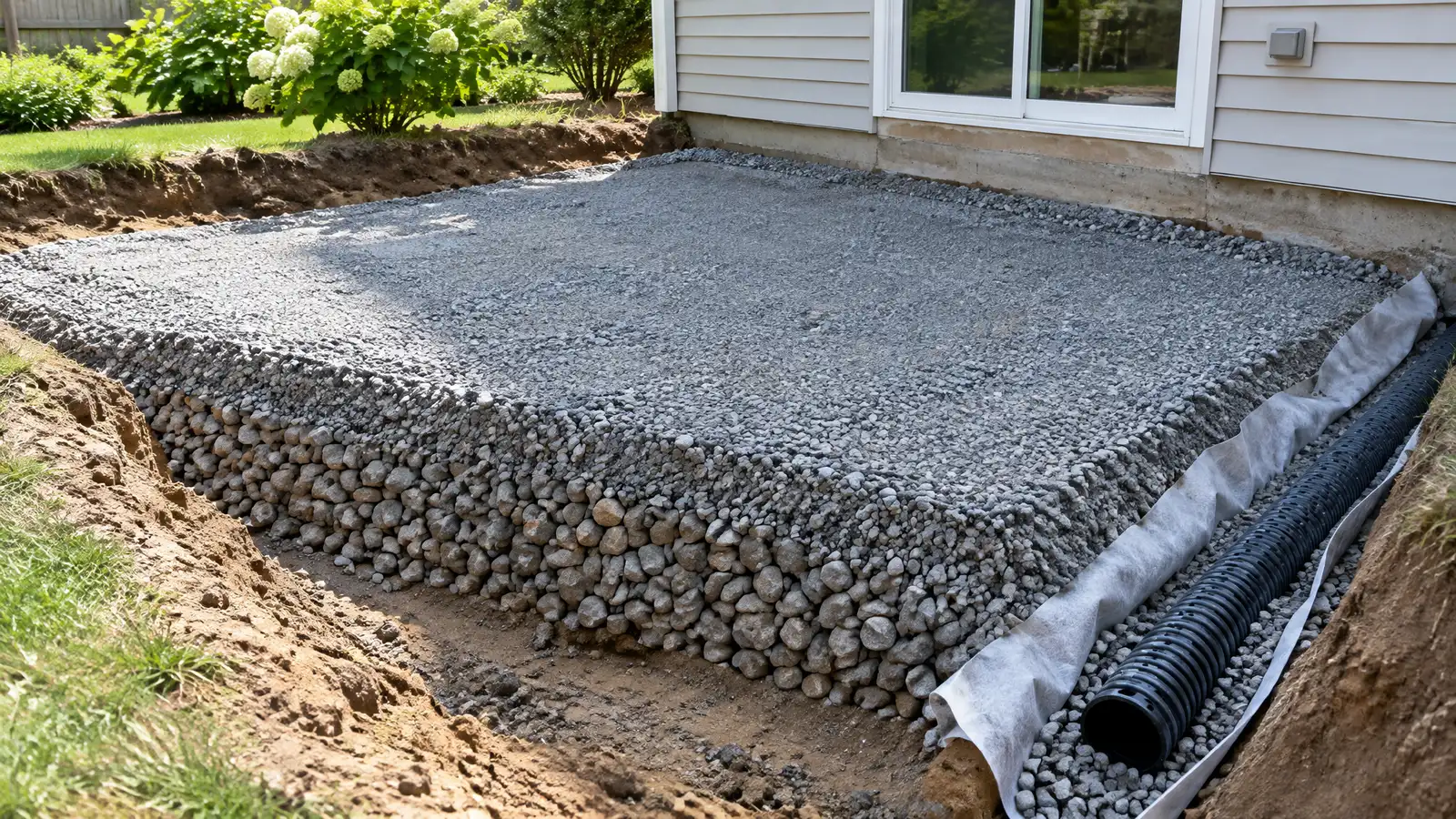
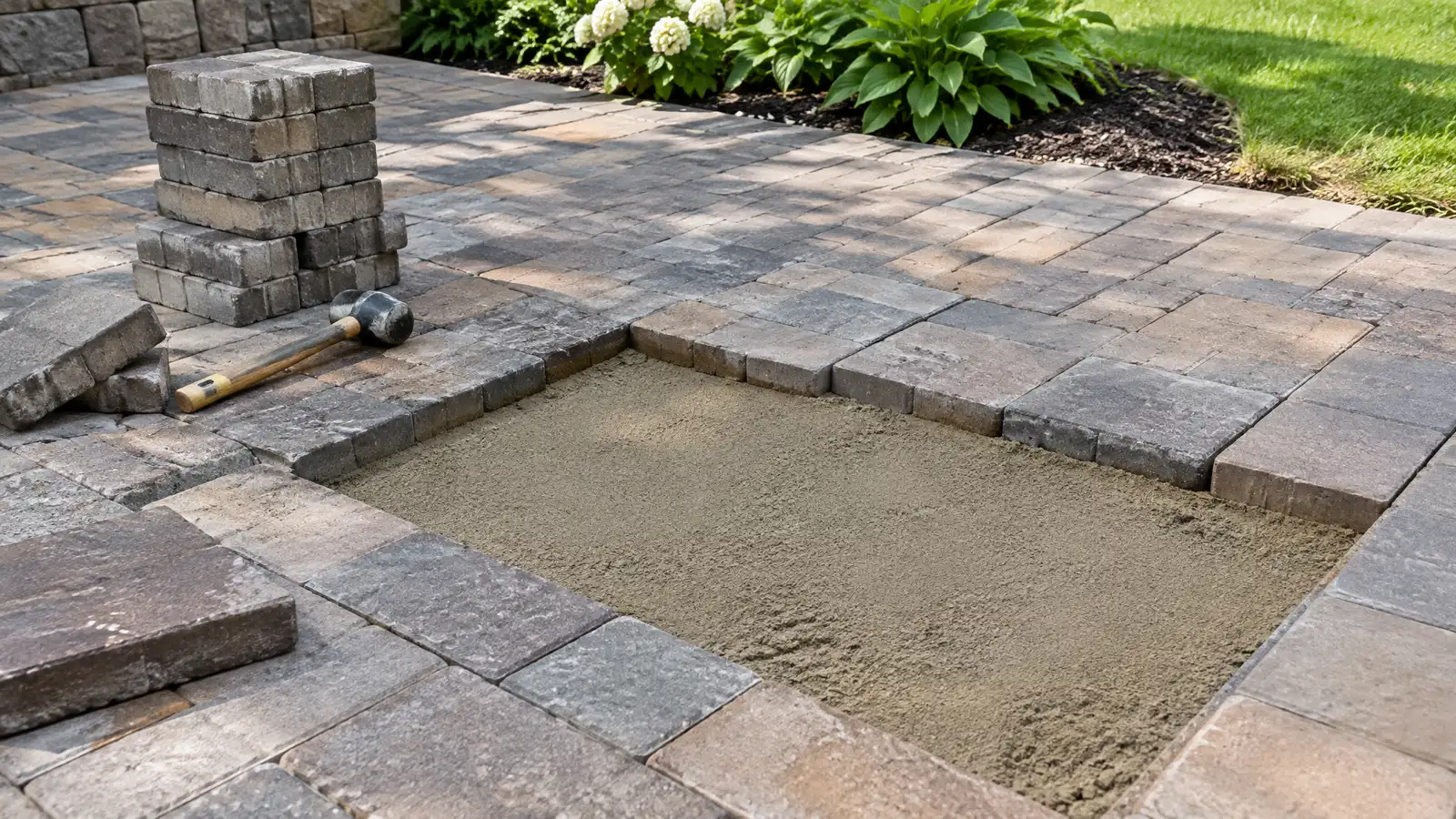
A compacted stone base lets water move away from under the surface. A weak or clay-heavy base holds water and heaves in winter.
Edge restraint keeps the base from spreading.
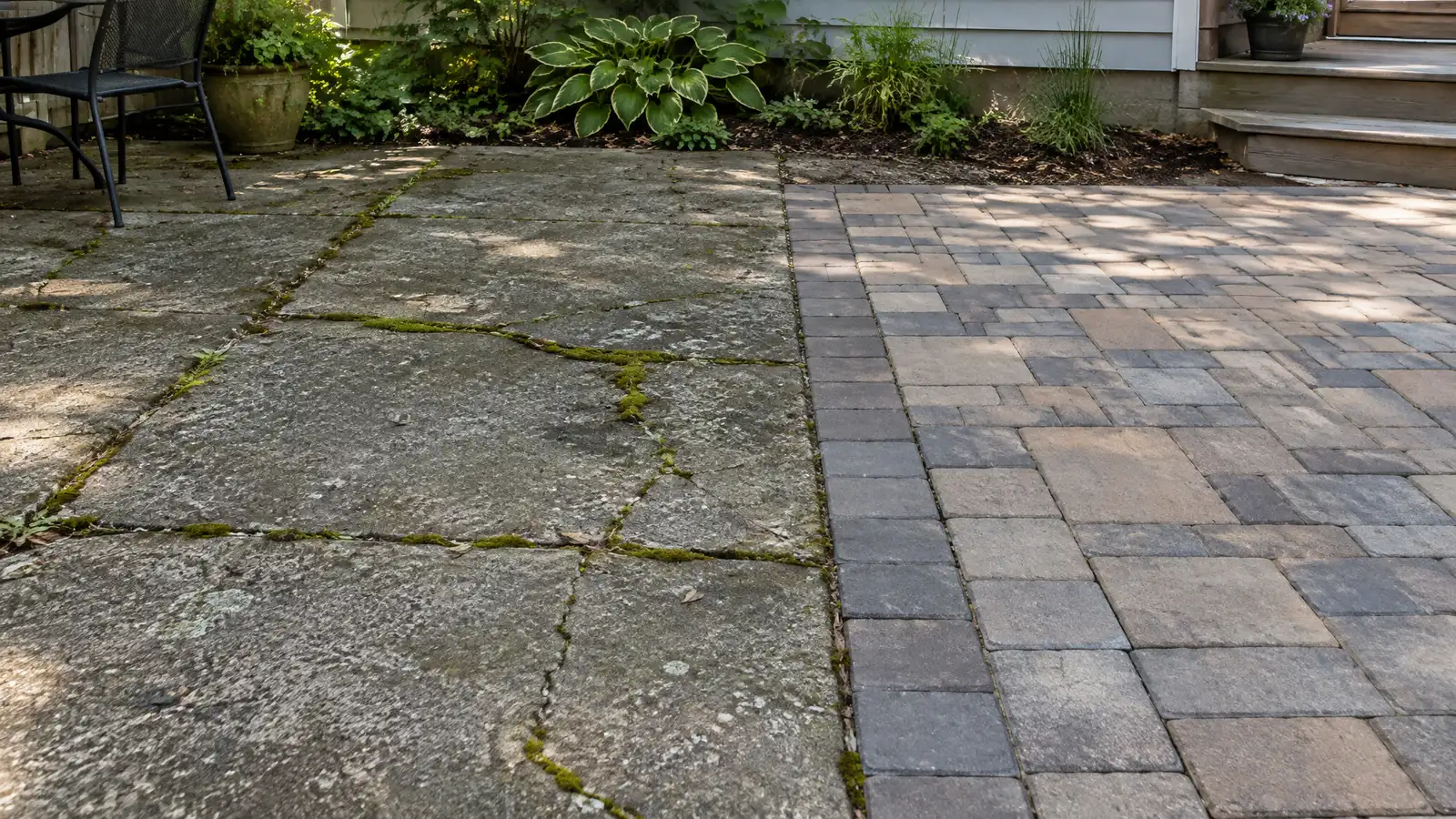
If pavers sink in a single area, water may be washing out the base. Lifting and re-laying with a better base fixes the cause.
Check after storms
Walk the patio after rain, and clear leaves from drains and edges. Small fixes early prevent bigger problems.
If water still stands, ask for a drainage review.
A short walk with a camera after a big storm gives you clear photos to show a contractor.
Send water away from the house, give it a clear outlet and build a base that drains.