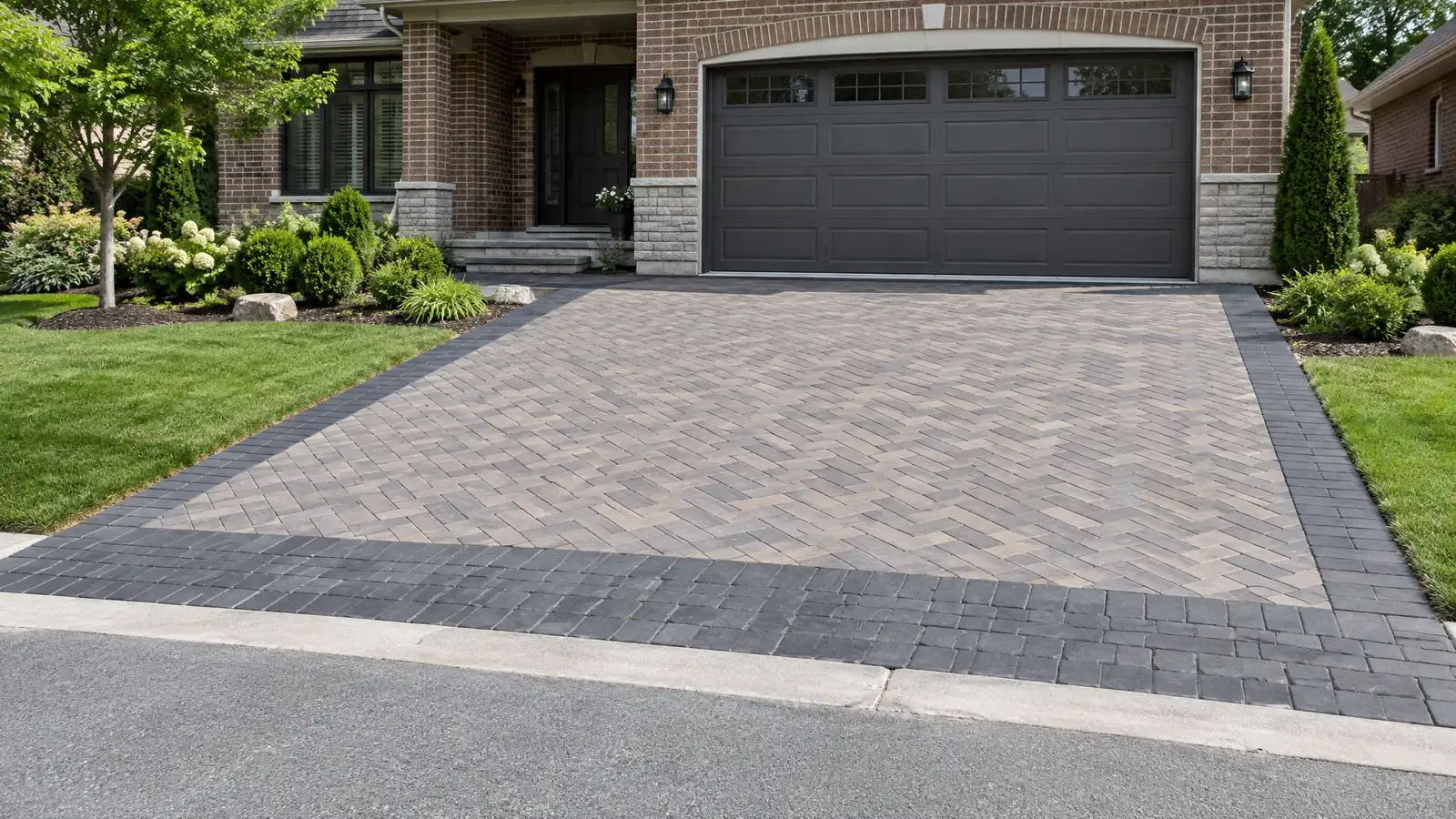
Interlocking paver driveways and aprons with heavy-duty bases that carry vehicles and look like part of the home.
Pavers make a driveway feel like a courtyard. The pattern, color and borders add richness to the front of the house, and individual units can be lifted and reset when a utility needs repair. A paver driveway has to be built with a deeper, stronger base than a patio, and the details of the edge and the apron decide how well it lasts.
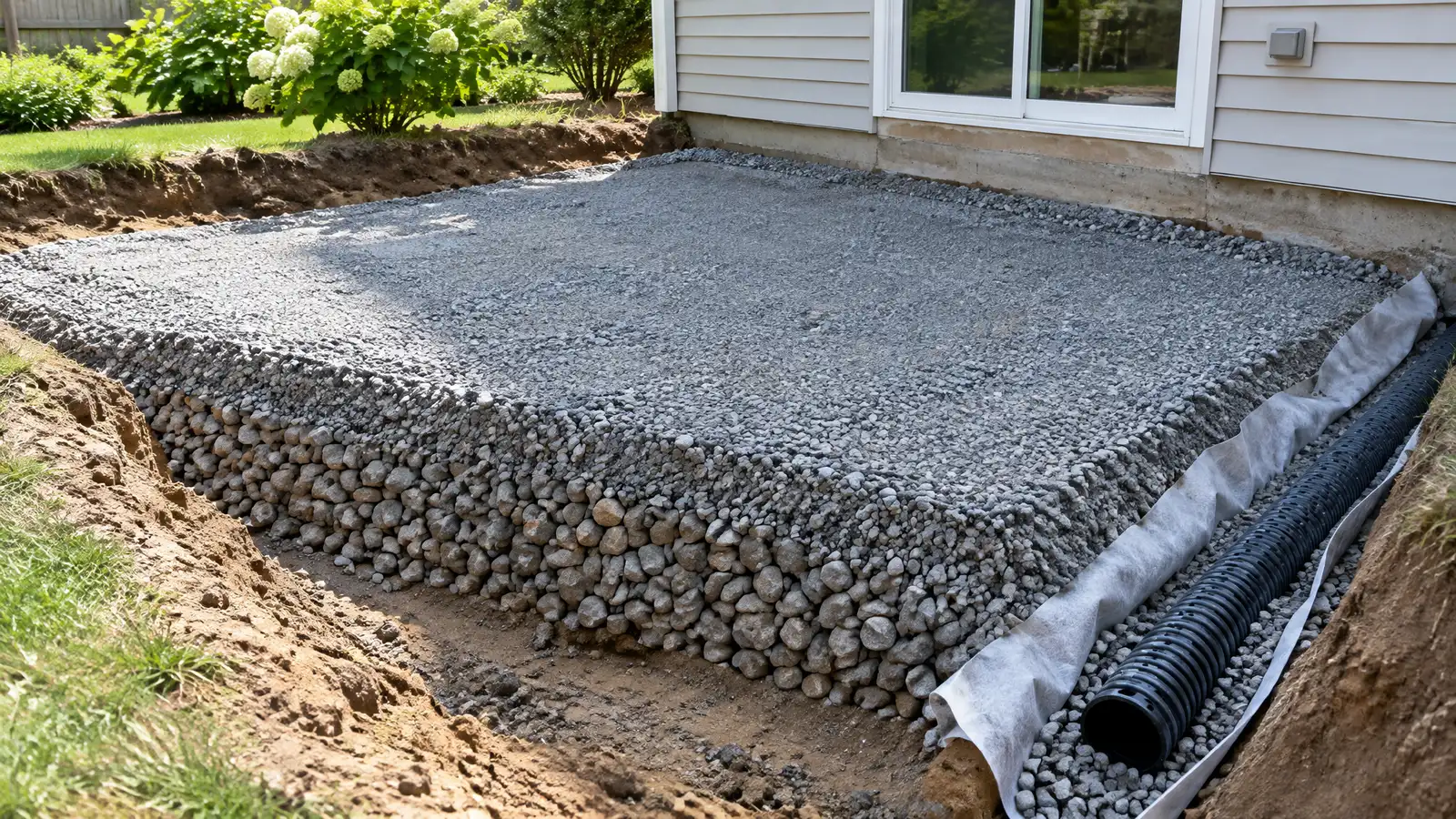
Your designer helps you choose pavers rated for vehicles, patterns and borders. The crew excavates deeper than for a patio, builds a thick compacted base in lifts, sets edge restraint, screeds the bedding layer and lays the pavers, then compacts and fills the joints. The apron where the driveway meets the street is built to handle turning loads, and drainage is built in. Maintenance is simple. A broom, a hose and a fresh dose of joint sand every few years keep the surface tight, and individual pavers can be lifted and reset when a utility needs access, which is a real advantage over a poured slab.
Thicker pavers and herringbone patterns resist turning and braking forces better than thin units.
A thick compacted base spreads the weight of vehicles, which keeps the surface flat.
Concrete or heavy edge restraint stops the drive from spreading, especially at the apron.
Polymeric sand locks pavers, and a simple care routine keeps the surface tight.
Drag the handle to compare.
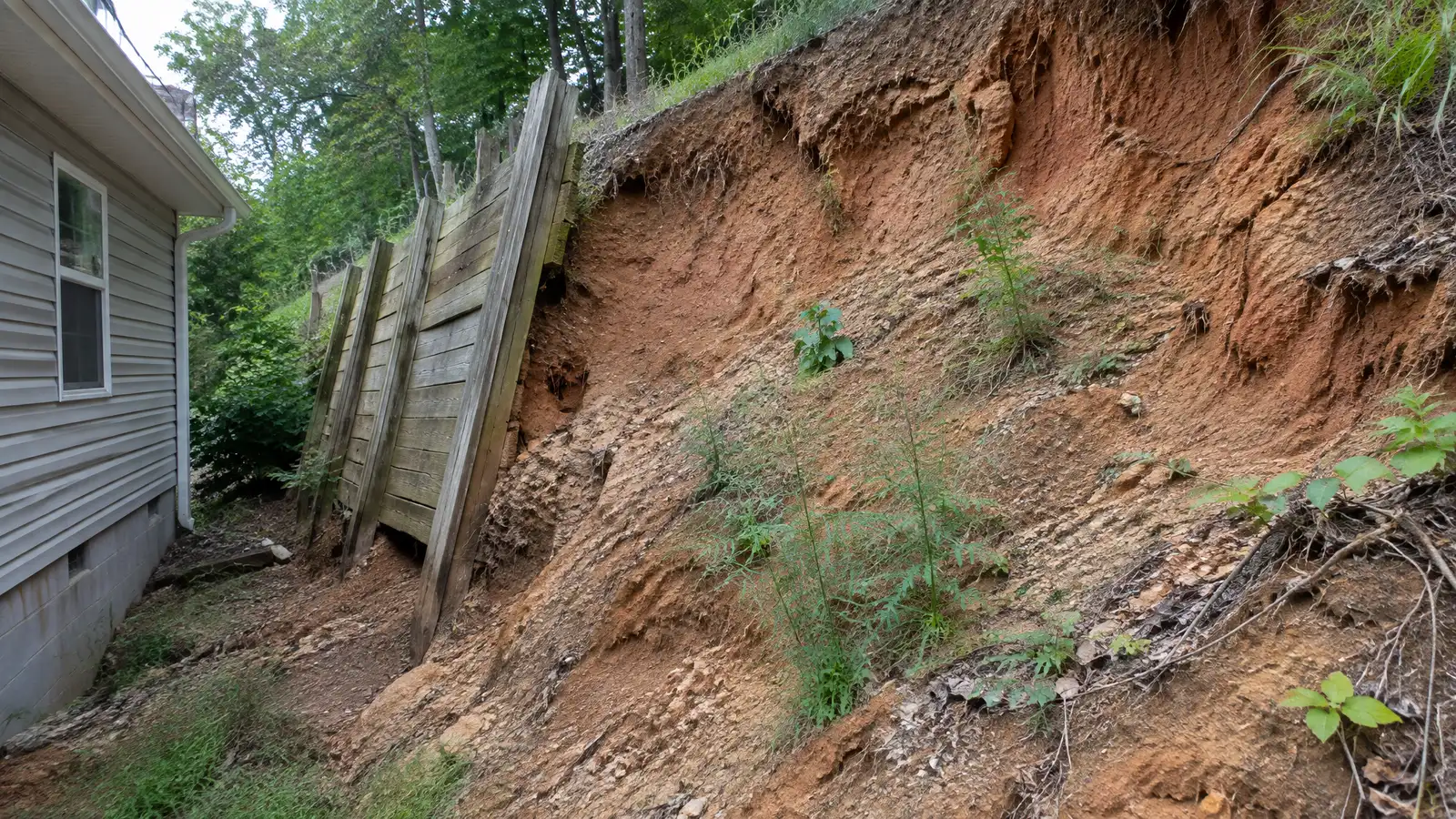 BeforeAfter
Rating, color and pattern picked.
Larger base prepared.
Compacted in lifts.
Edges fixed.
Pavers placed and locked.
Sand and cleanup finished.
Every topic has its own page with what to expect and how we approach it.
 ResourceNSIA trade association for the natural stone industry that publishes education, design guidance and technical resources.Learn more
 ResourceWeb Soil SurveyA free online tool from the Natural Resources Conservation Service that maps soil types and their properties for…Learn more
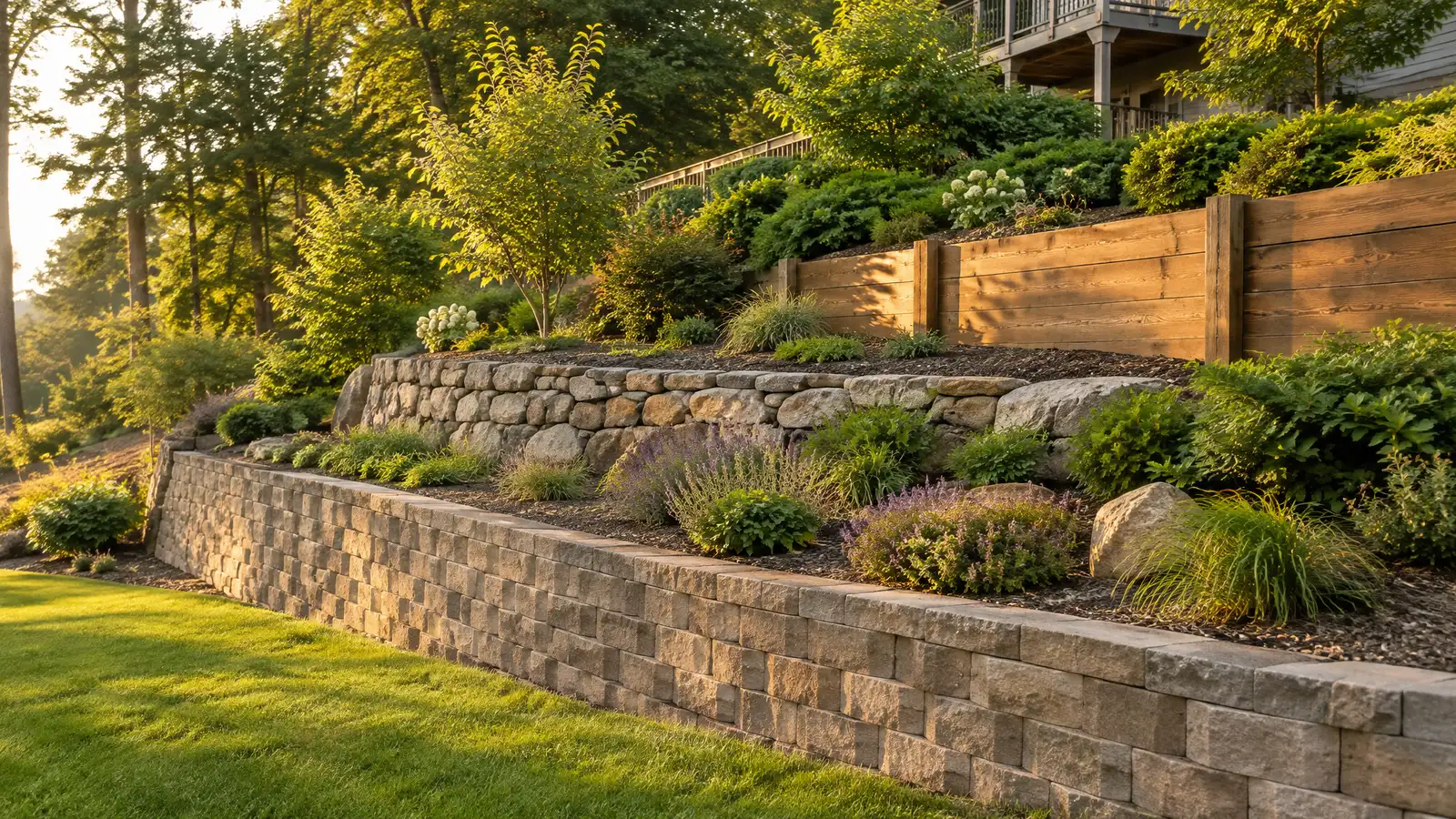 Comparison guideRetaining Wall TypesHow segmental block, natural stone, poured concrete, timber and gabion walls differ in strength, look, height and upkeep.Learn more
Enter your measurements to see square feet, pavers, base stone, sand, concrete, deck boards or wall block to plan for.
You tell us how you want to use your outdoor space. One call sets up a visit that fits your day.
A designer walks the yard, measures, notes slope, drainage, sun, trees and utilities and listens to your goals.
You see a layout, materials and a written scope with the base, drainage, structures and schedule before anything begins.
Utility marking is requested, the area is excavated and a compacted stone base and drainage are built first.
Surfaces, walls, structures and features are built in a clear order, with checks and photos along the way.
The site is cleaned up, the space is explained on a walk-through and care tips are shared.
Yes, with the right units and base, and delivery trucks need the strongest design. We plan for your use.
Herringbone interlocks best against turning forces, and we use it for driveways.
A well compacted base and firm edges keep them tight, and joint sand renewal helps.
Snow-melt systems can be planned under pavers, and they add cost and need design. We discuss it.
Prompt cleaning and a sealer reduce staining, and we share care tips.
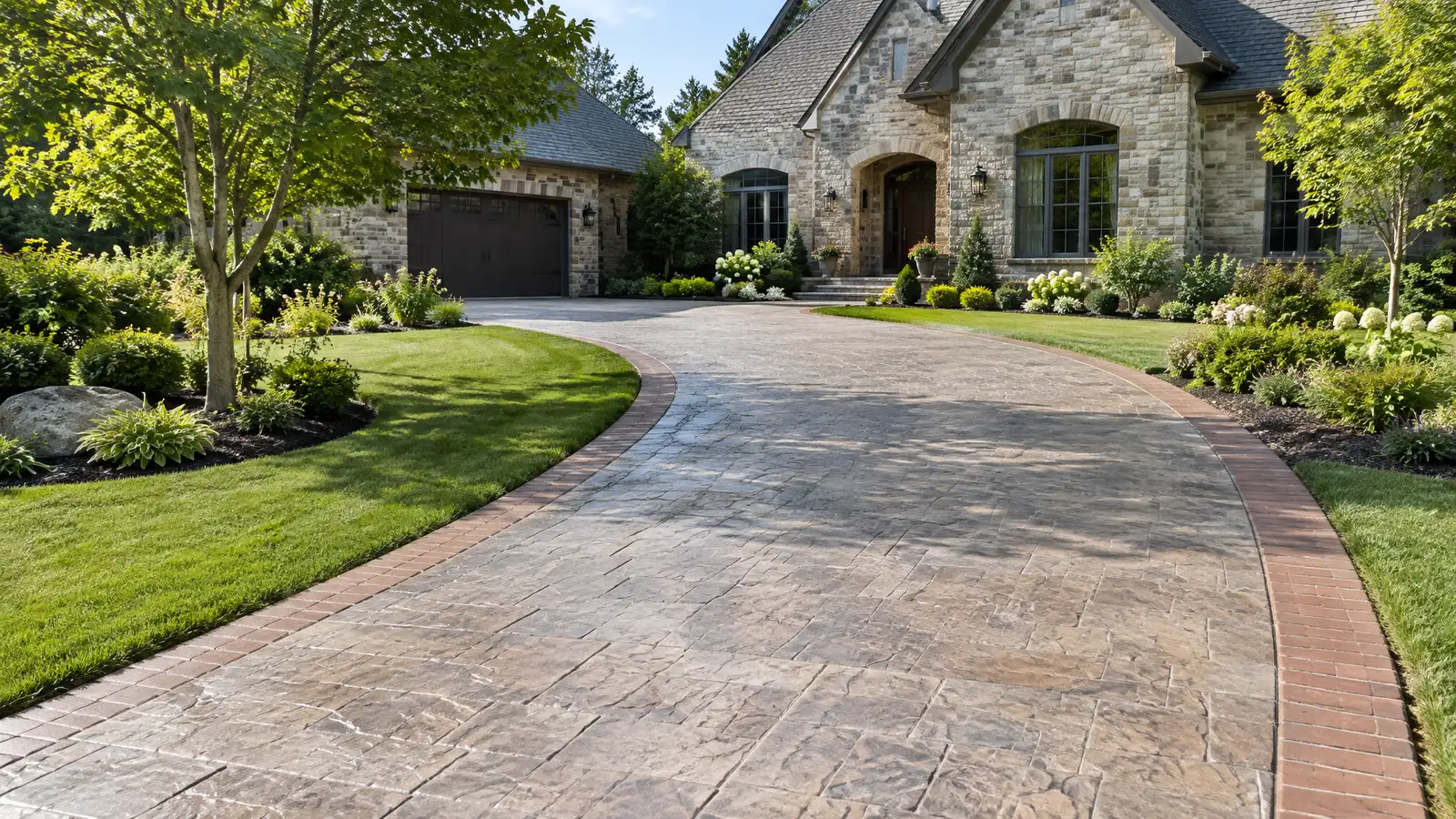 Custom DrivewaysCustom concrete, paver, stamped and decorative driveways with a deep base, steel, drainage and borders that match the…Explore
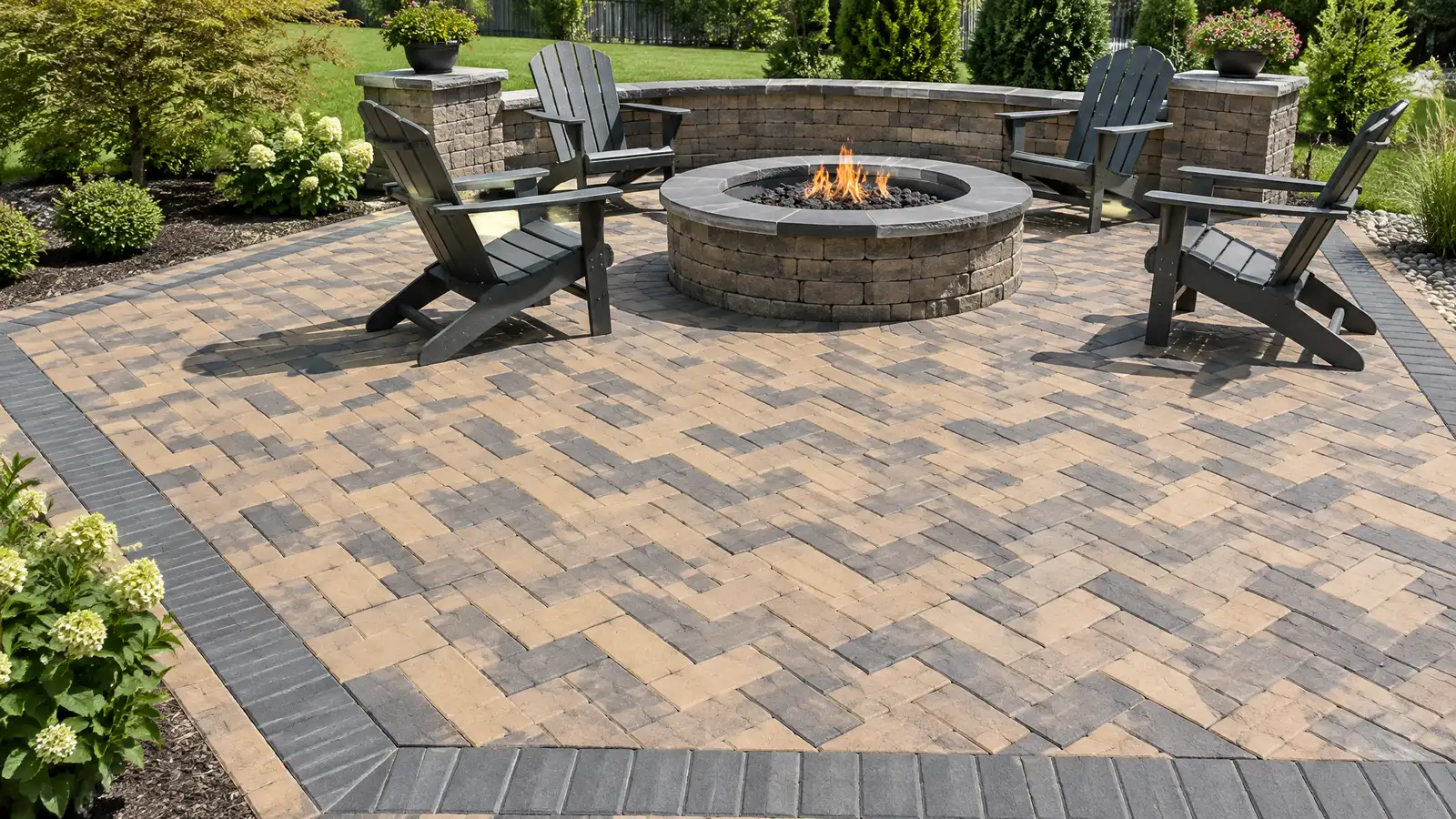 Patio PaversInterlocking concrete and clay paver patios set on a compacted stone base, with patterns, borders and colors that…Explore
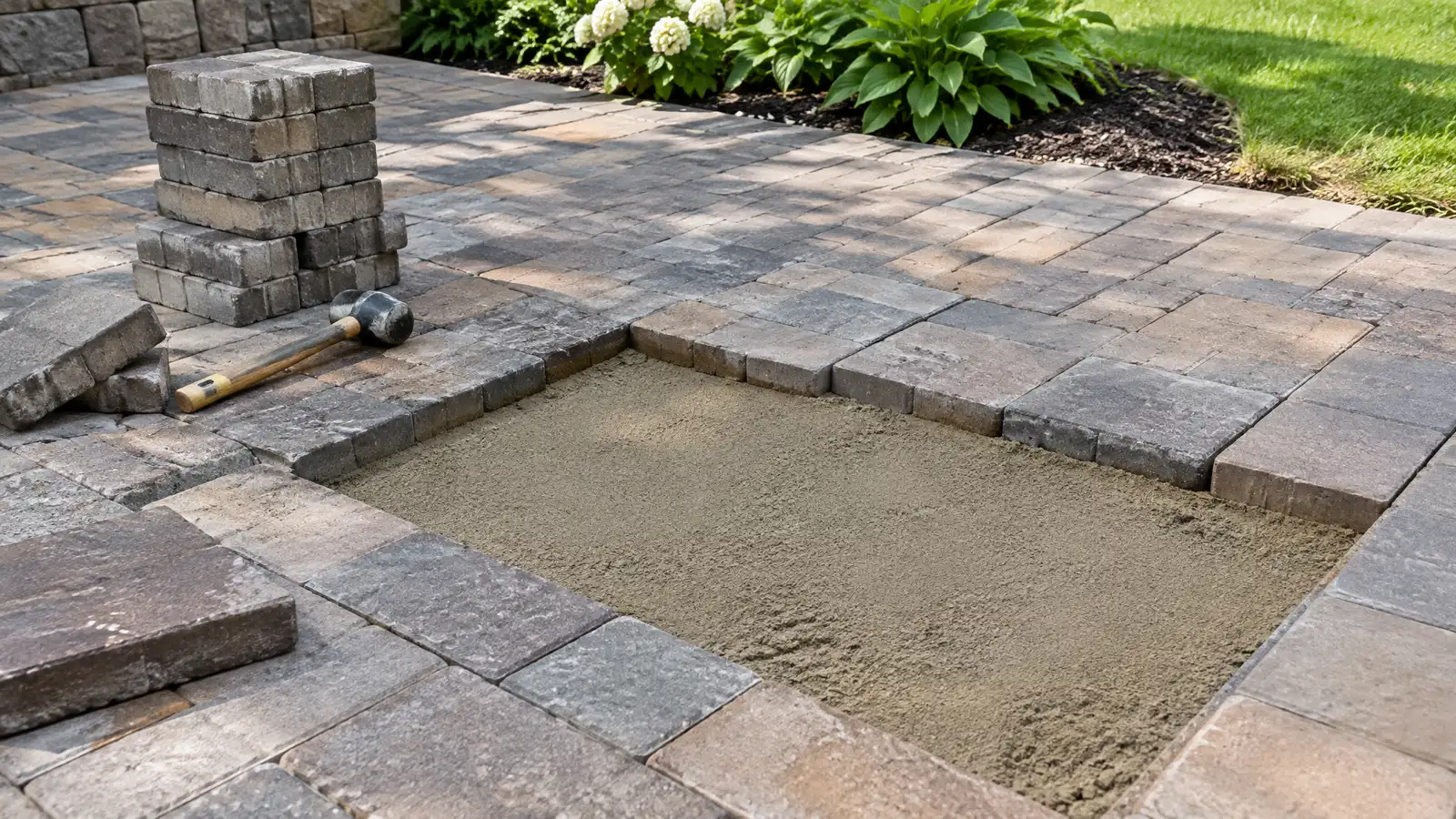 Patio Repair and Paver LevelingFix sunken pavers, wobbly stones, cracked slabs and uneven patios by rebuilding the base and relaying the surface…Explore
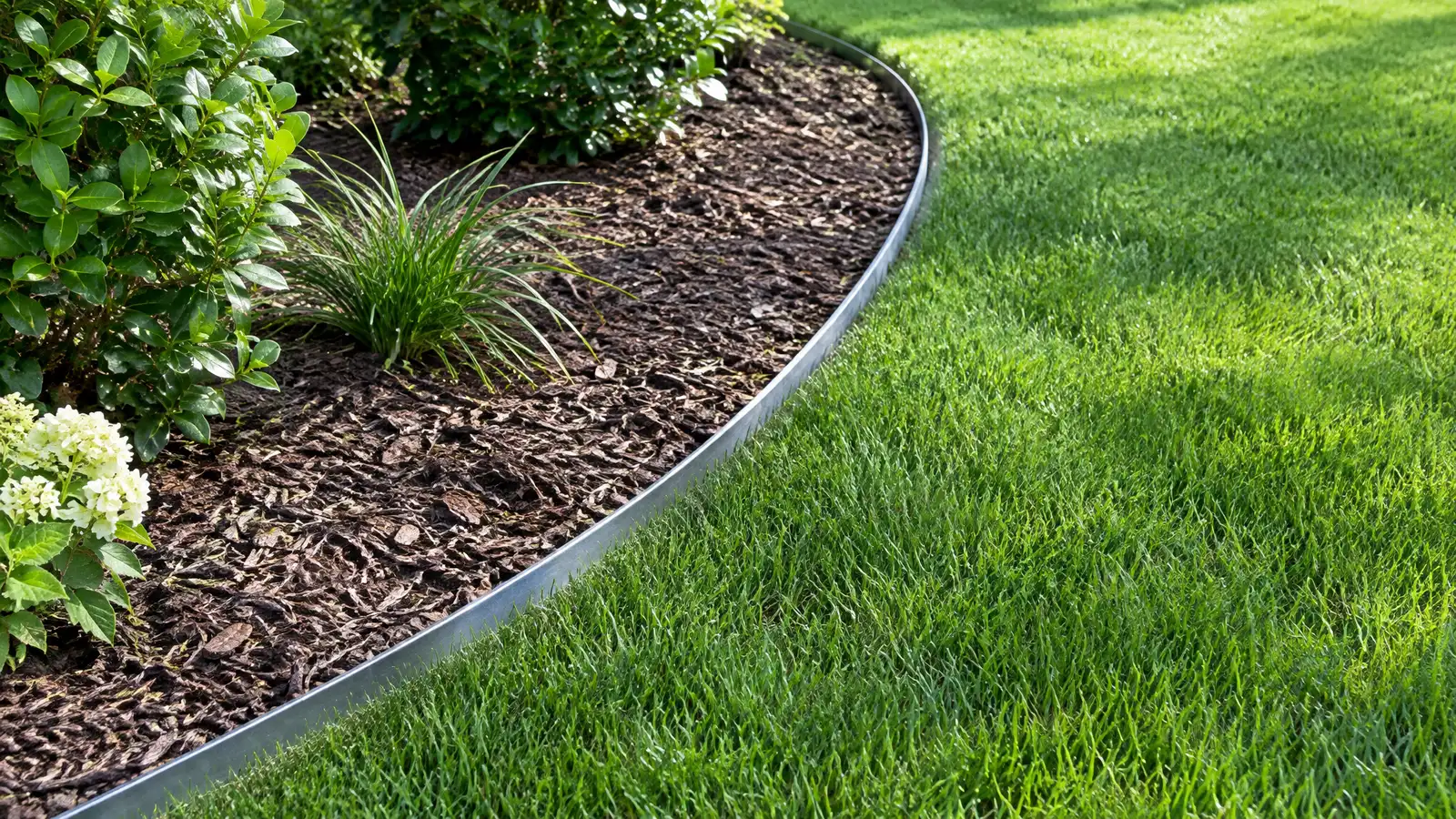 Edging and BordersStone, steel, brick and paver edging that frames beds, lawns and paths and keeps mulch, gravel and soil…Explore
Tell us about your yard and one designer will call you back to set up a visit.
Or call (615) 431-3789 to talk now.