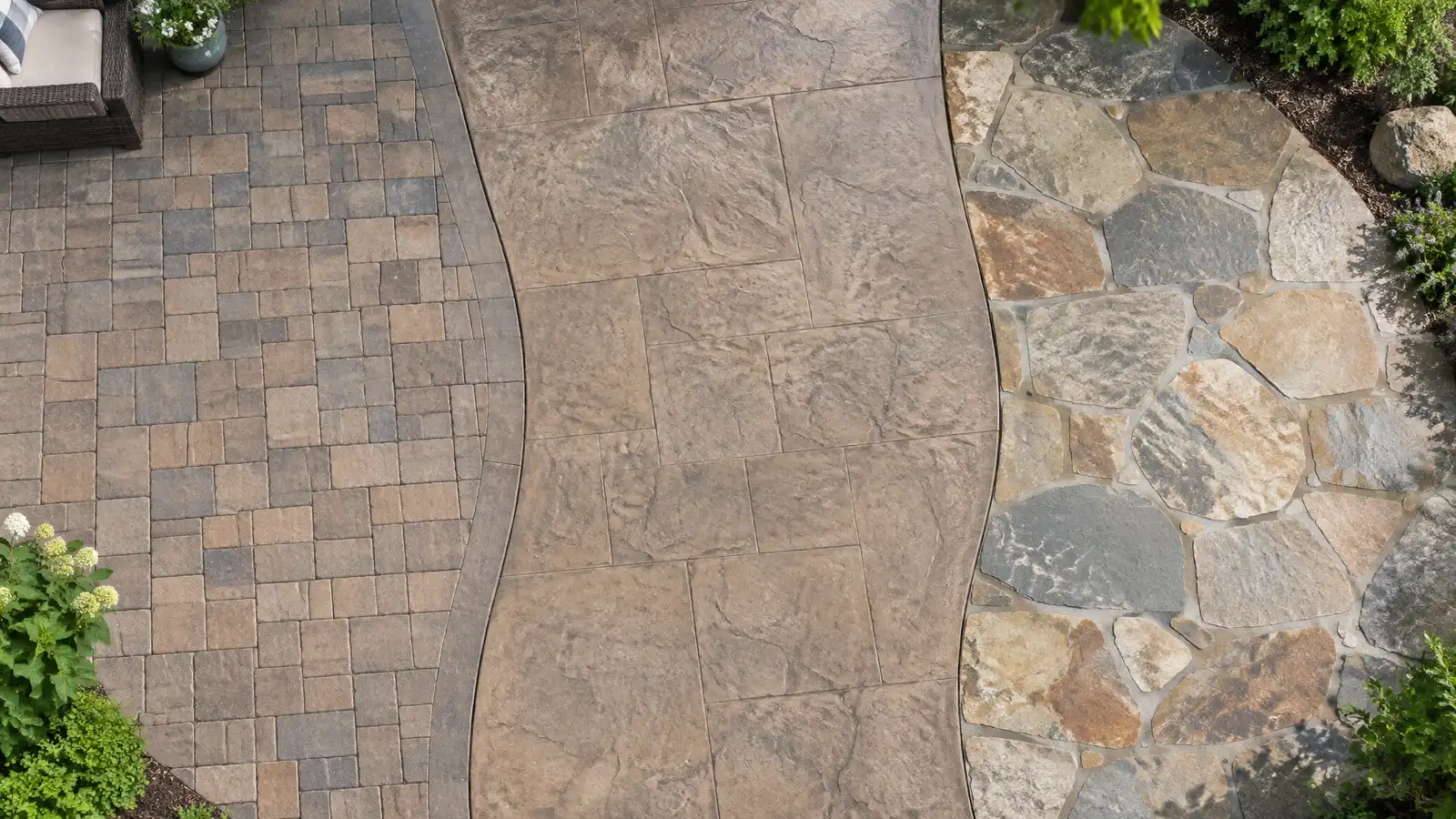
A side-by-side look at three popular patio surfaces: interlocking pavers, stamped concrete and natural stone.
These three surfaces are the most common choices for a finished patio. Pavers are individual units locked together on a compacted base. Stamped concrete is poured as one slab and pressed with patterns and color. Natural stone is cut from the earth and set on a base or on concrete. Each has its own character, strengths and care needs.
Pavers flex with the ground and can be lifted and reset, which helps in clay soil. Stamped concrete gives a continuous surface and many patterns, though cracks can appear and are harder to hide. Natural stone gives the most variation and a premium feel and needs more skill to install flat. The best choice is the one that matches your style, site and tolerance for upkeep.
Many colors and patterns, repairable, flexible with soil movement.
A seamless slab with patterns that imitate stone, brick or wood.
Unique pieces with real color variation and texture.
Pavers allow joint drainage, and slabs shed water across the surface.
Pavers lift and reset, and slabs are patched or resurfaced.
All three handle sun and rain, with different care for each.
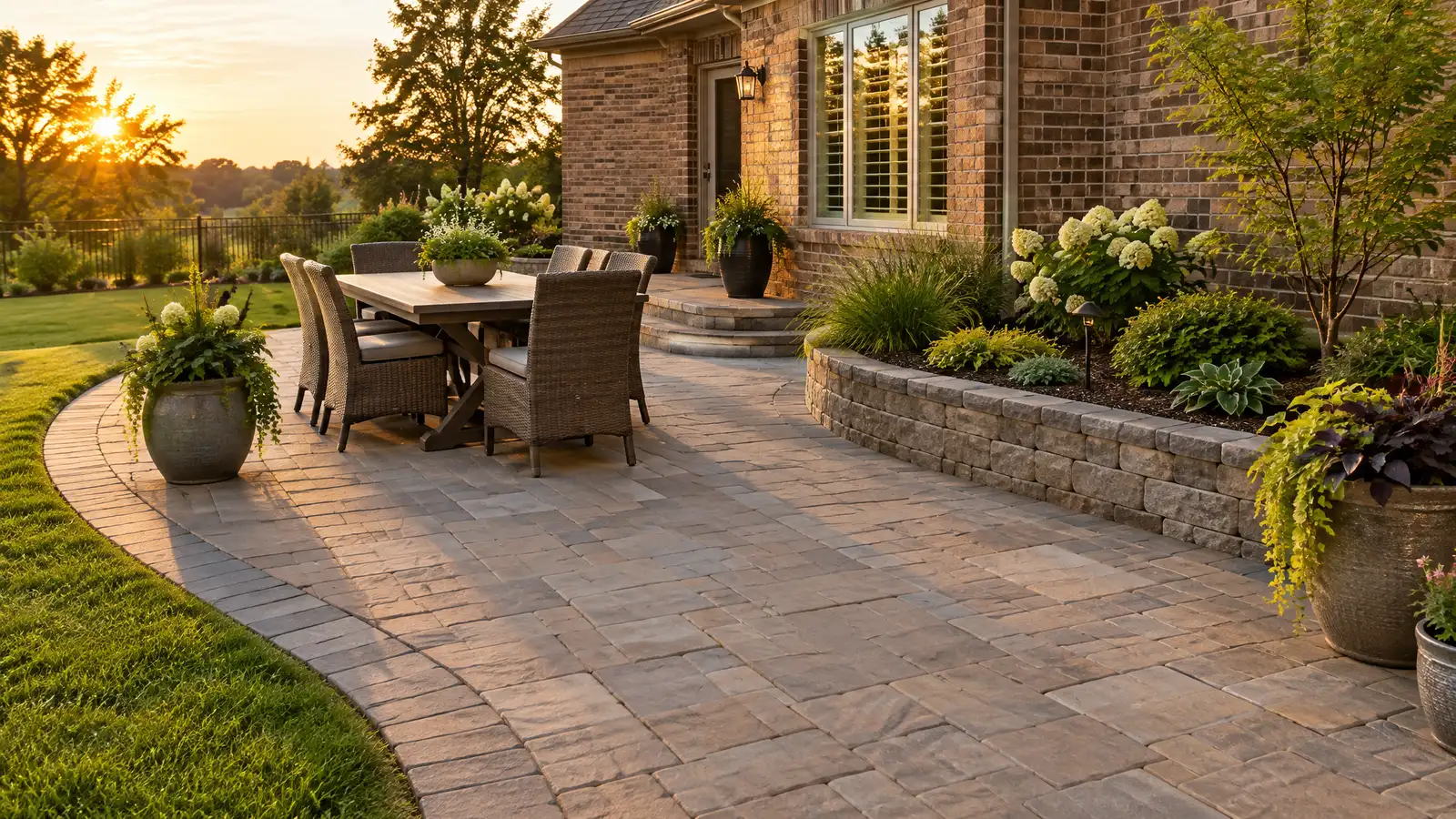 Custom PatiosCustom patios designed around how you live, with a compacted base, drainage and the surface, shape and size…Explore
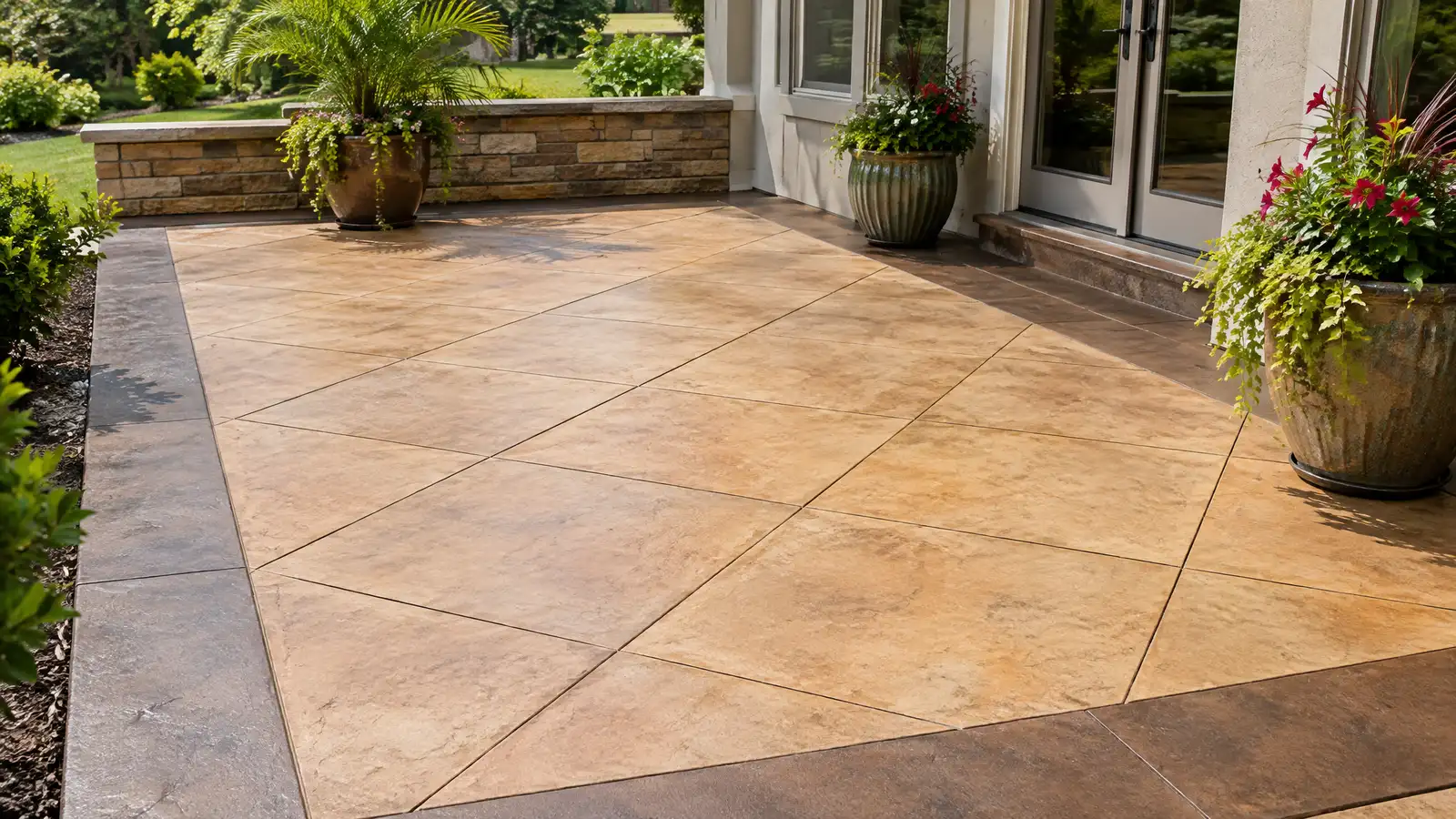 Decorative and Colored ConcreteColored, stained, exposed aggregate and saw-cut concrete patios and walks that dress up a durable slab with texture…Explore
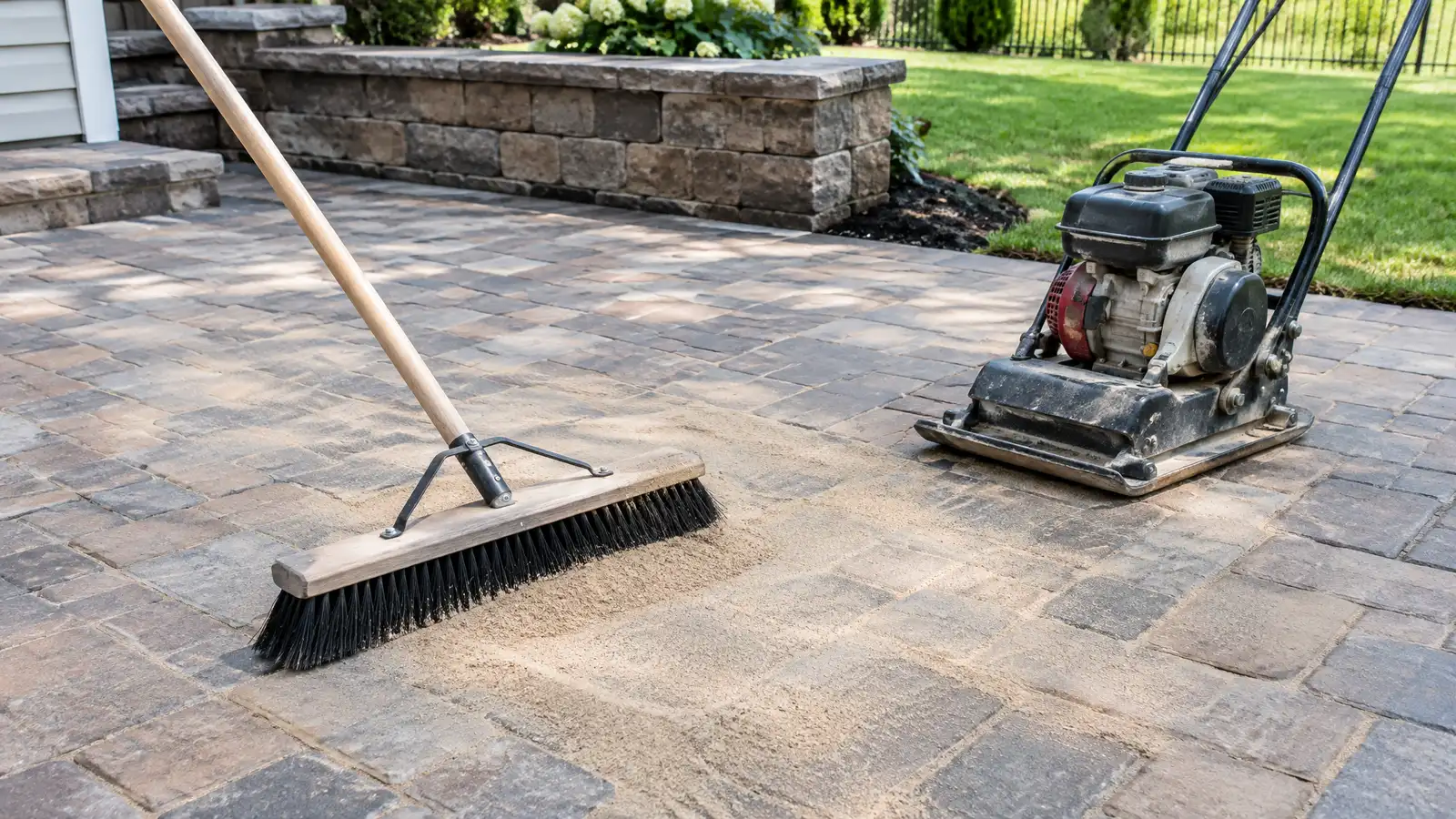 Patio Sealing and Joint SandingSealing and re-sanding that protects pavers and stone from stains, weeds and weather and brings back their color.Explore
Pick a material, size a job or ballpark a budget.
 Patio Material Picker QuizAnswer a few questions about looks, upkeep, drainage, kids, pets and budget focus to see which patio materials usually fit.Try it
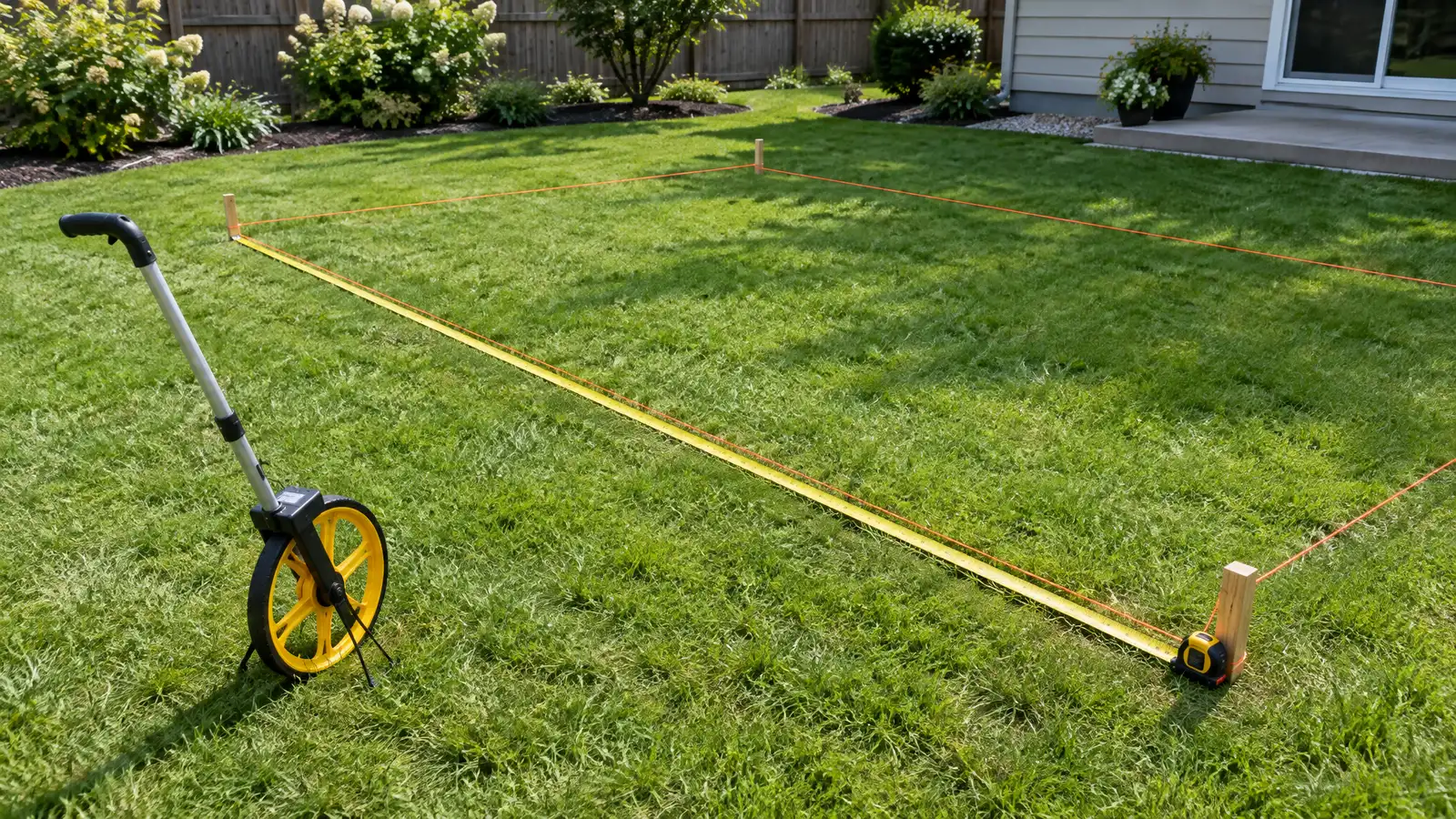 Patio Size and Materials CalculatorEnter your measurements to see square feet, pavers, base stone, sand, concrete, deck boards or wall block to plan for.Try it
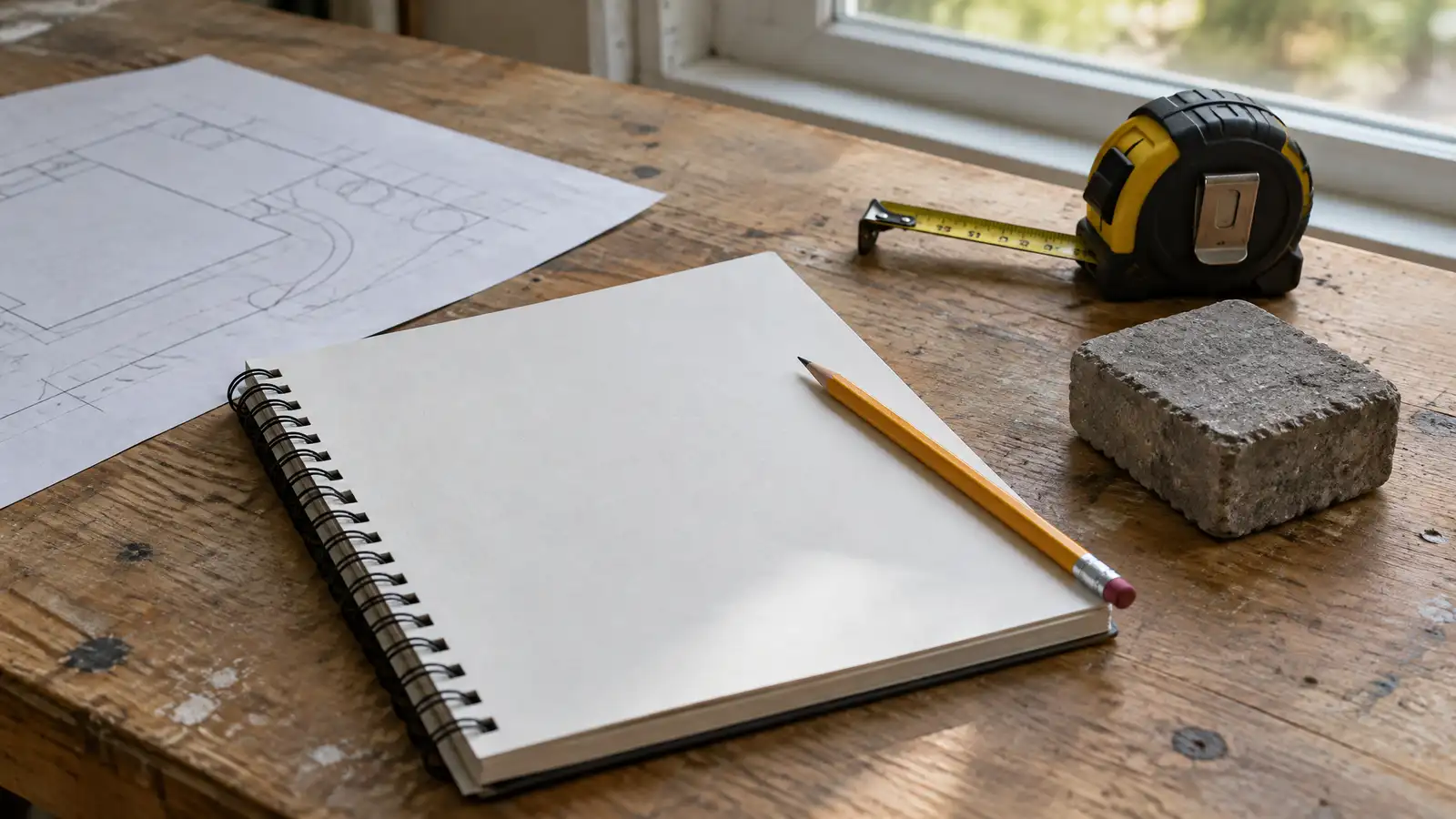 Patio and Outdoor Living Budget PlannerPick a patio, deck, kitchen, fire pit, wall or lighting job, set the size and add extras to see a ballpark planning range. Placeholder values only.Try it
Poured slabs are more likely to crack, while pavers move with the ground. Joints and a good base reduce cracking in slabs.
Cracks can be filled and surfaces resealed or resurfaced, though matching color and pattern takes care.
It depends on the stone and finish, and textured finishes grip better.
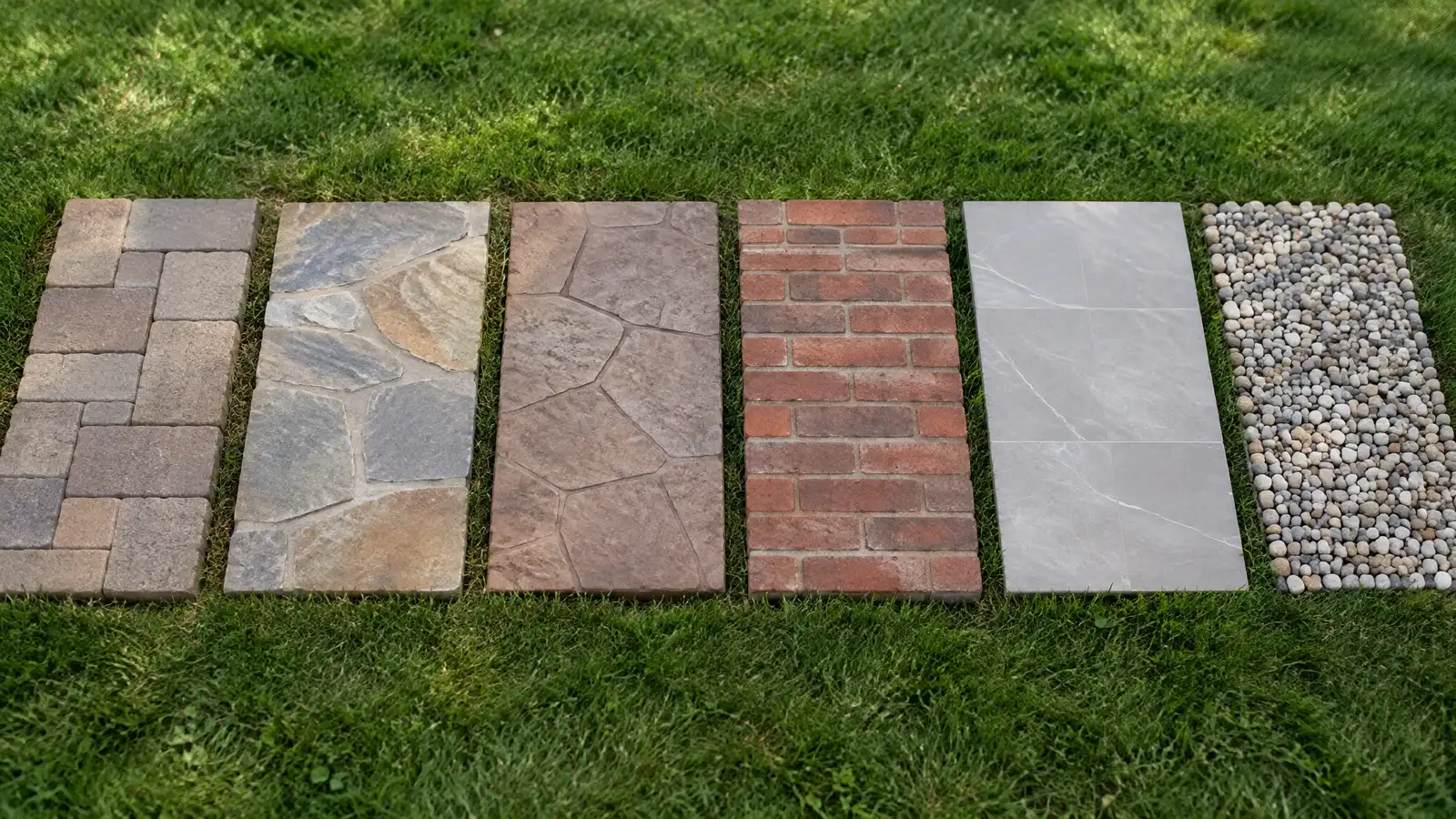
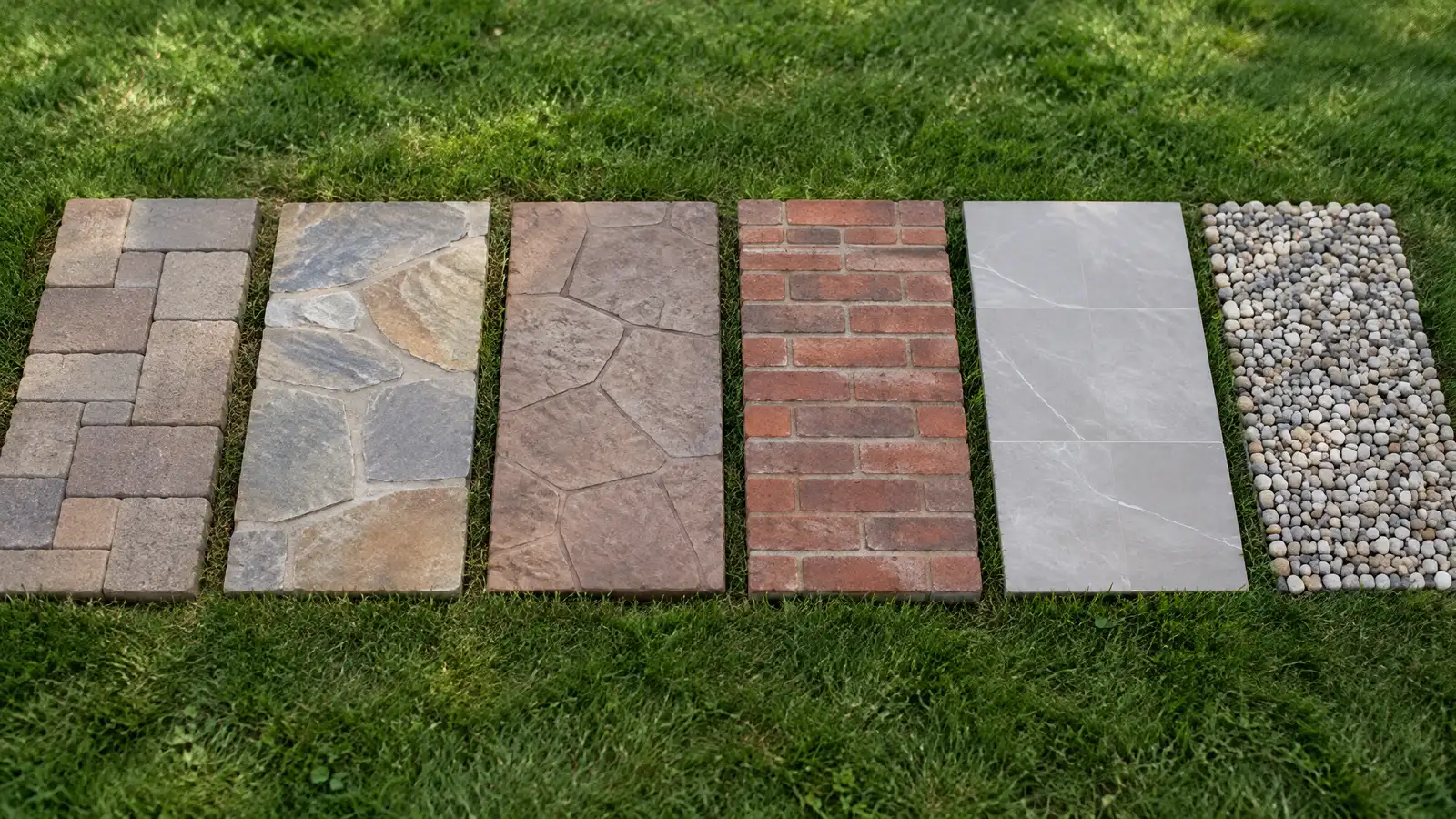 Comparison guidePatio MaterialsHow pavers, poured concrete, stamped concrete, natural stone, brick, tile and gravel differ in look, comfort, upkeep and…Learn more
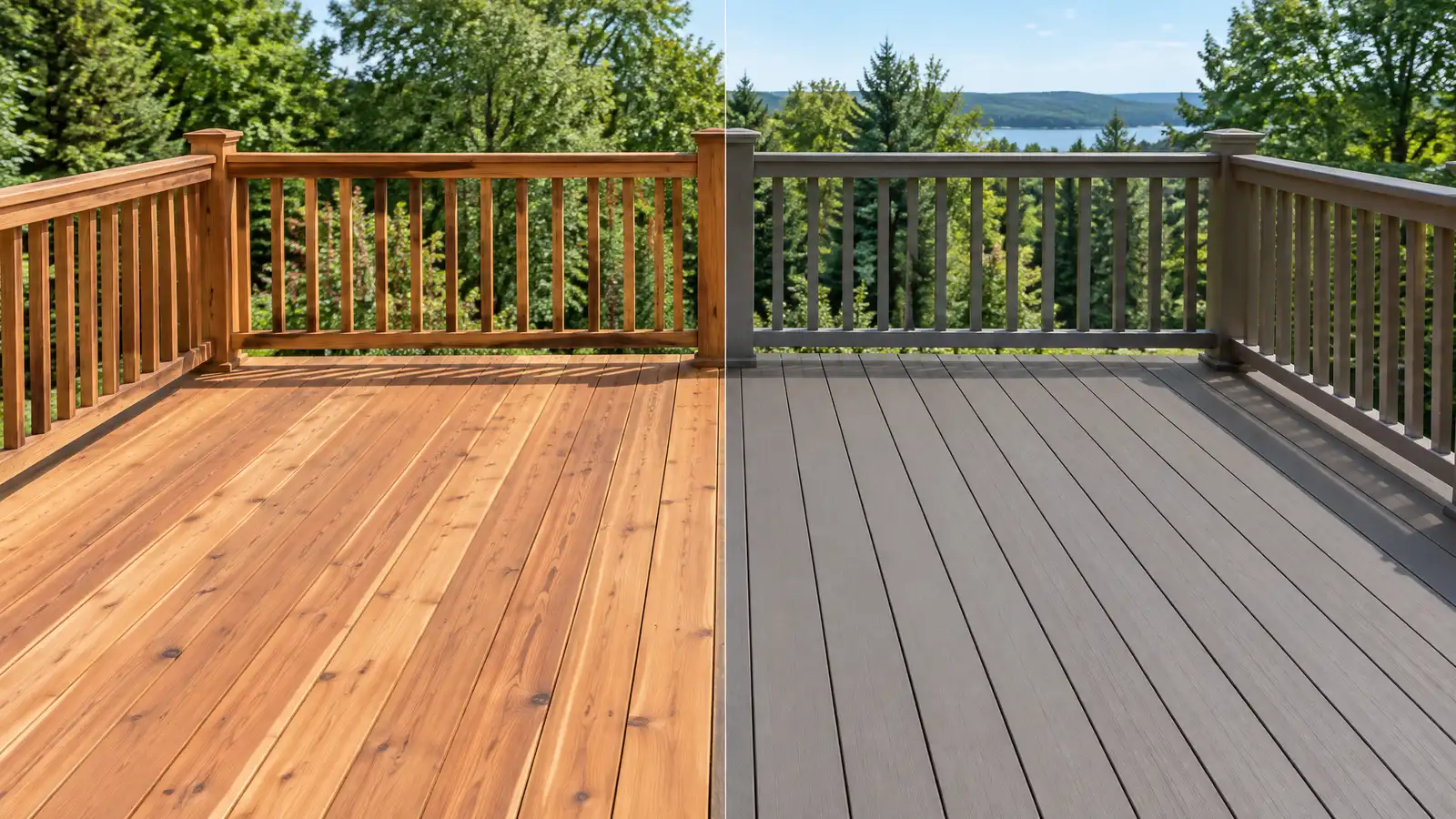 Comparison guideWood vs Composite DeckingHow pressure-treated wood, cedar, hardwood and composite decking differ in look, upkeep, heat and lifespan.Learn more
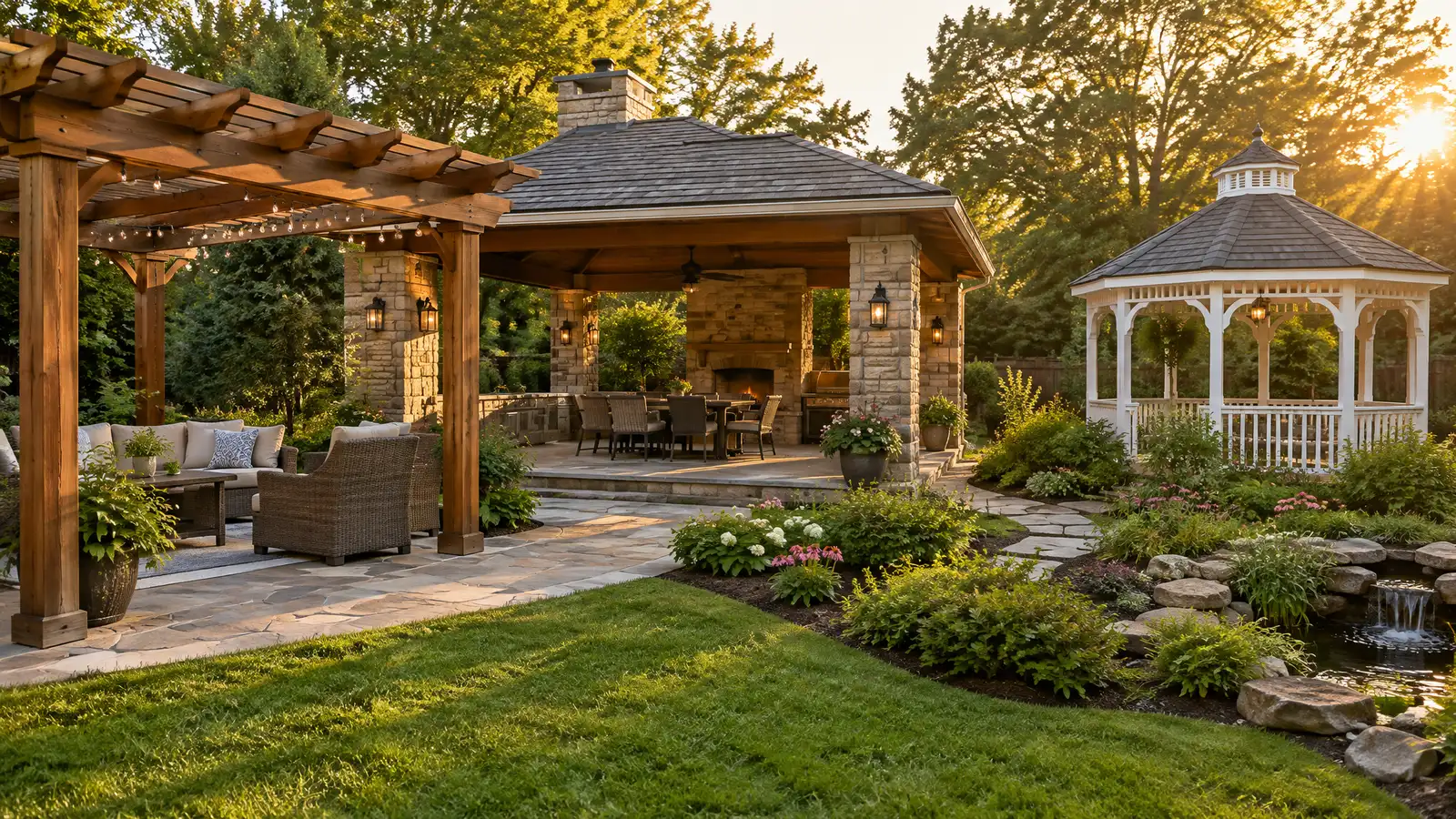 Comparison guidePergolas, Pavilions and GazebosHow pergolas, pavilions, gazebos, covered patios and louvered roofs differ in shade, rain protection, structure and style.Learn more
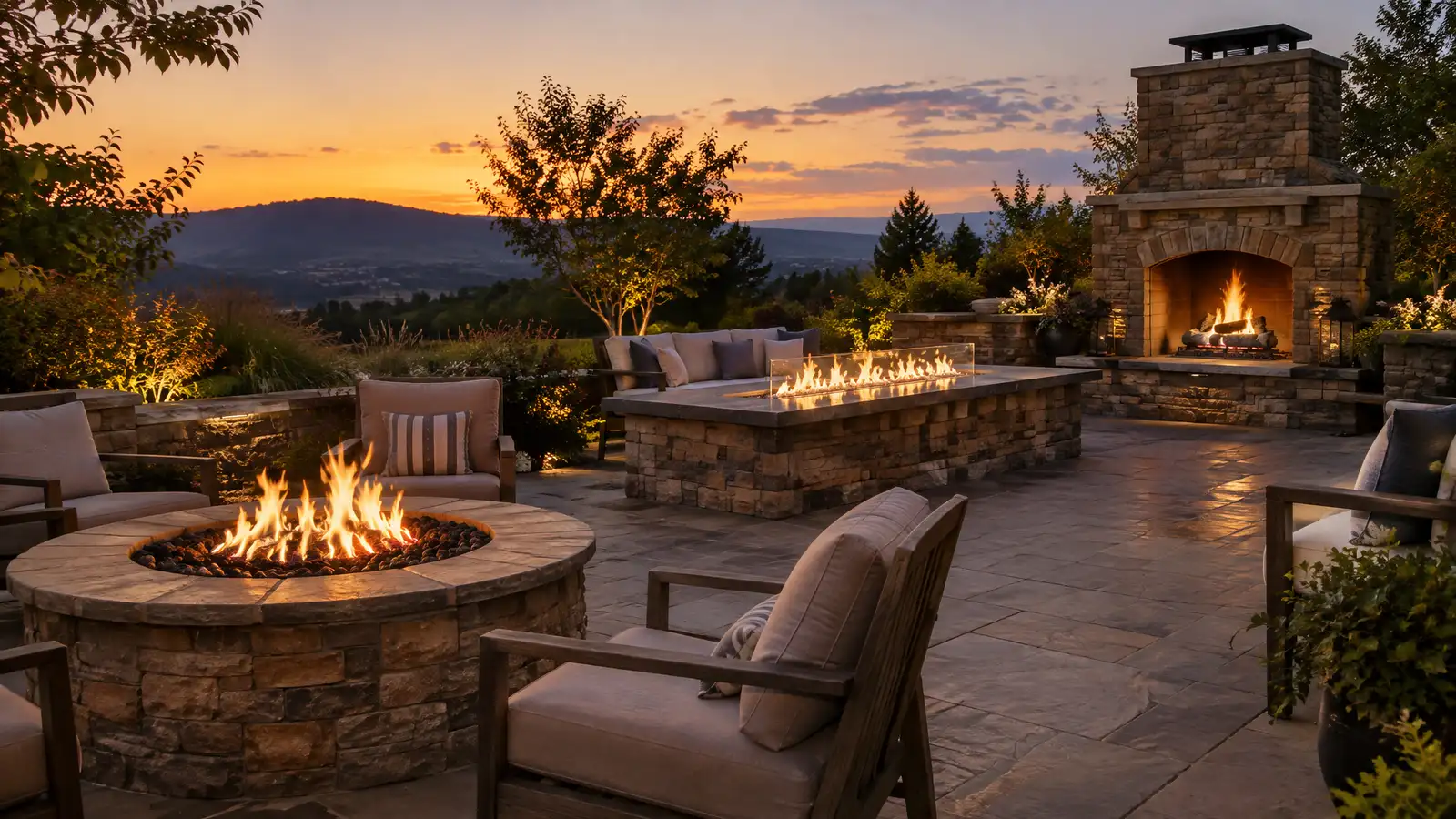 Comparison guideFire Pits and FireplacesHow wood-burning, gas and propane fire pits, fire tables and outdoor fireplaces differ in warmth, ease, safety and…Learn more
Call and describe your yard and what you would love to do outside. A designer will listen, talk through the options and give you a clear written estimate.