Why excavation, compacted stone, bedding and slope decide how well a patio lasts, especially in clay soil.
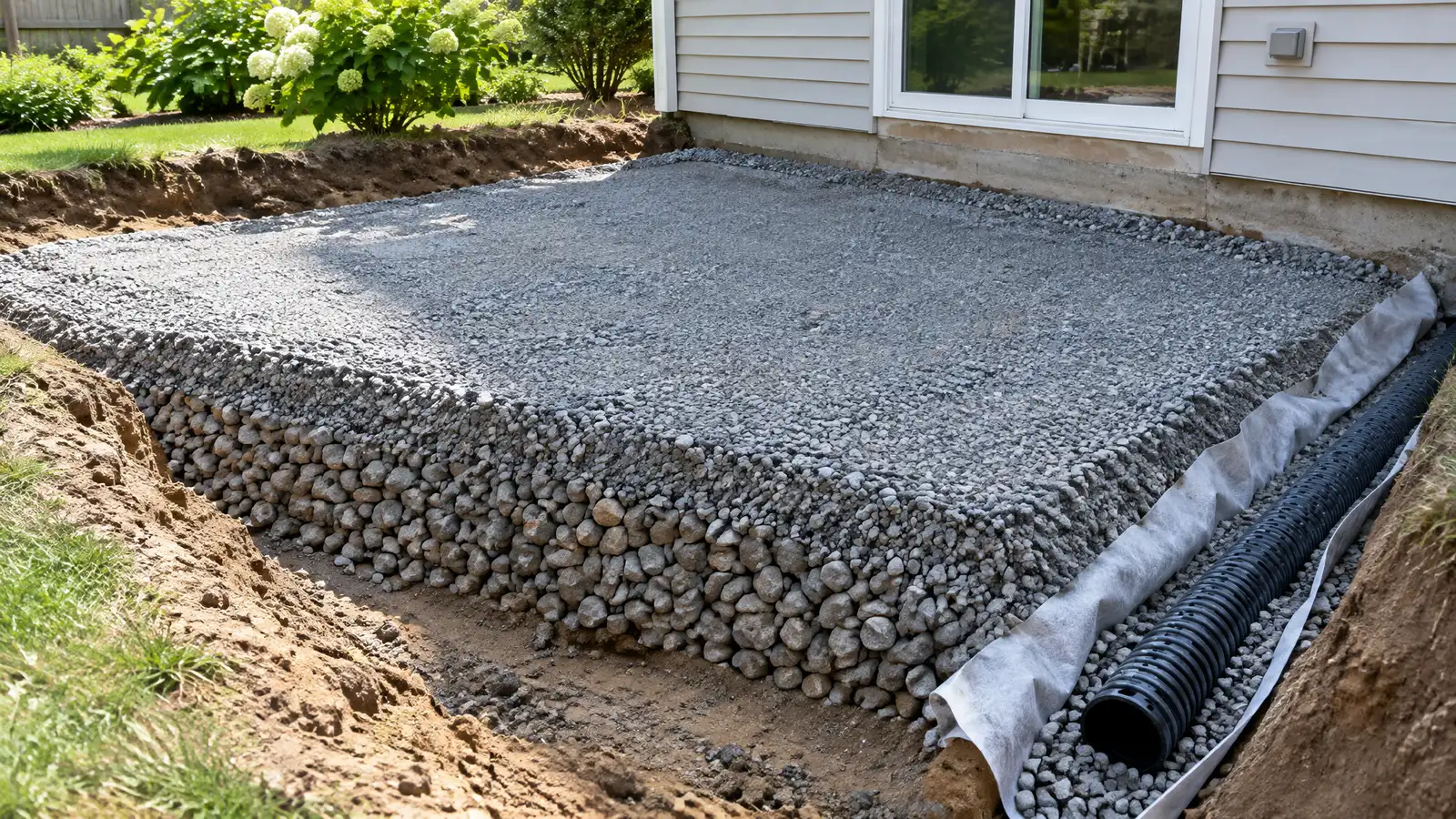
What you do not see decides how long a patio lasts. A proper patio starts with excavation to firm soil, a layer of compacted crushed stone, a thin bedding layer and then the surface. The base spreads loads, drains water and resists freezing and thawing. A thin base on clay soil is the most common reason patios sink or heave.
Slope matters too. A patio should fall gently away from the house, usually about a quarter inch per foot, so water does not pool. Edge restraint holds pavers in place, and drains handle larger flows. We explain the depth, material and slope we plan for your site, and we compact in layers so the base stays firm.
Remove topsoil and soft soil down to firm ground.
Layers of crushed stone compacted to carry loads.
A gentle fall away from the house to shed water.
A thin leveling layer for pavers or stone.
Restraints that hold the surface in place.
Pipes and basins for larger flows.
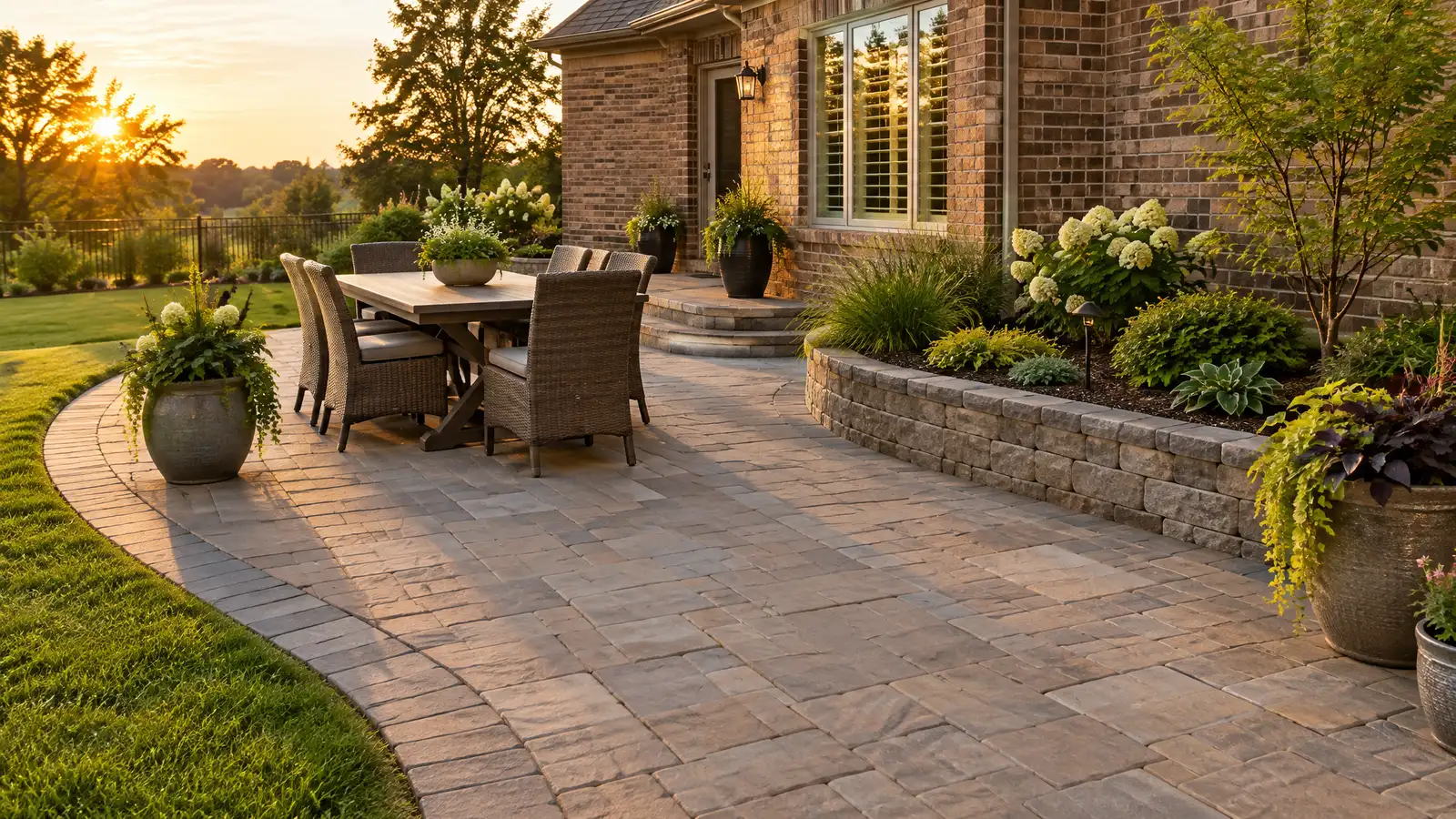 Custom PatiosCustom patios designed around how you live, with a compacted base, drainage and the surface, shape and size…Explore
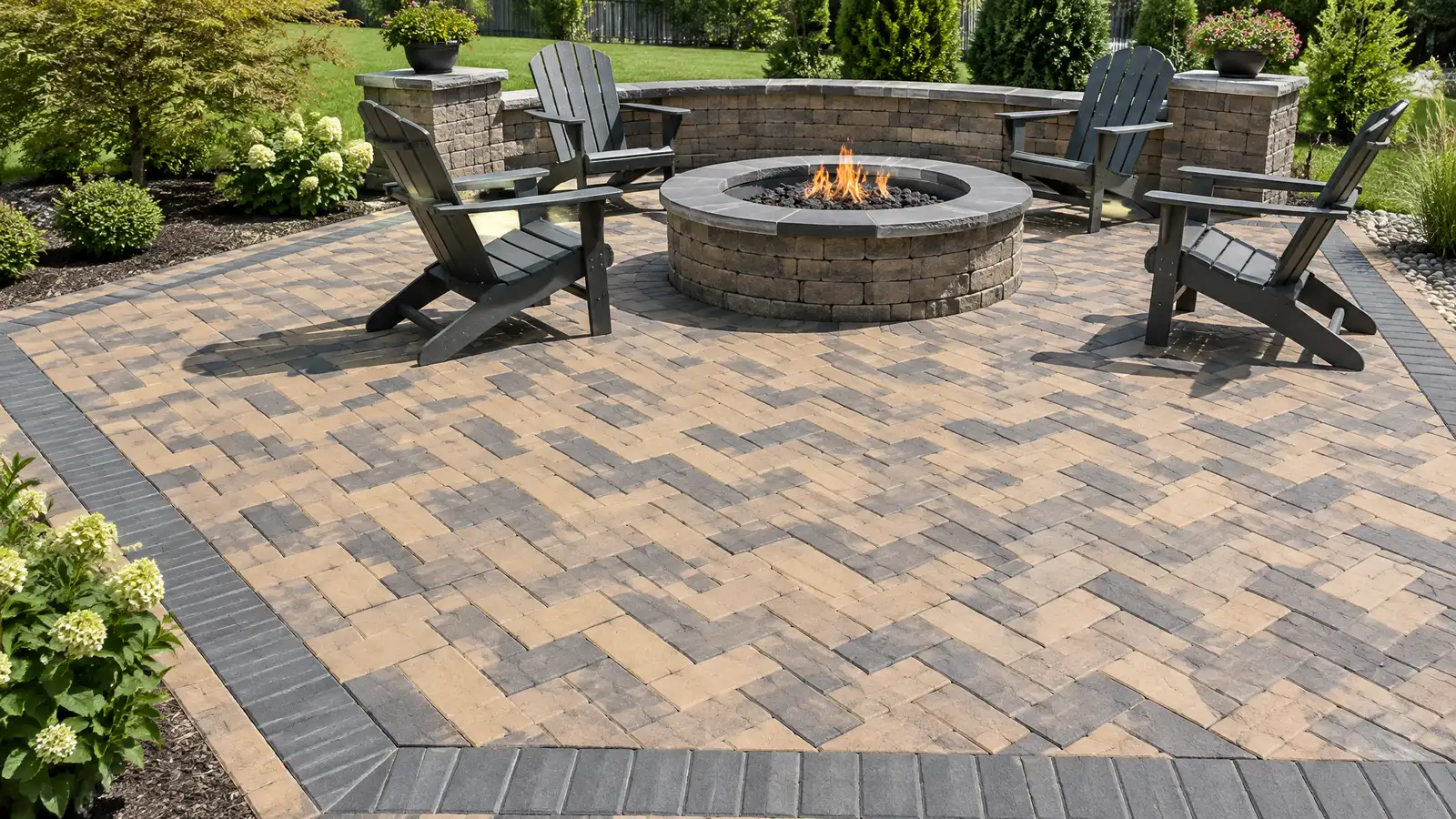 Patio PaversInterlocking concrete and clay paver patios set on a compacted stone base, with patterns, borders and colors that…Explore
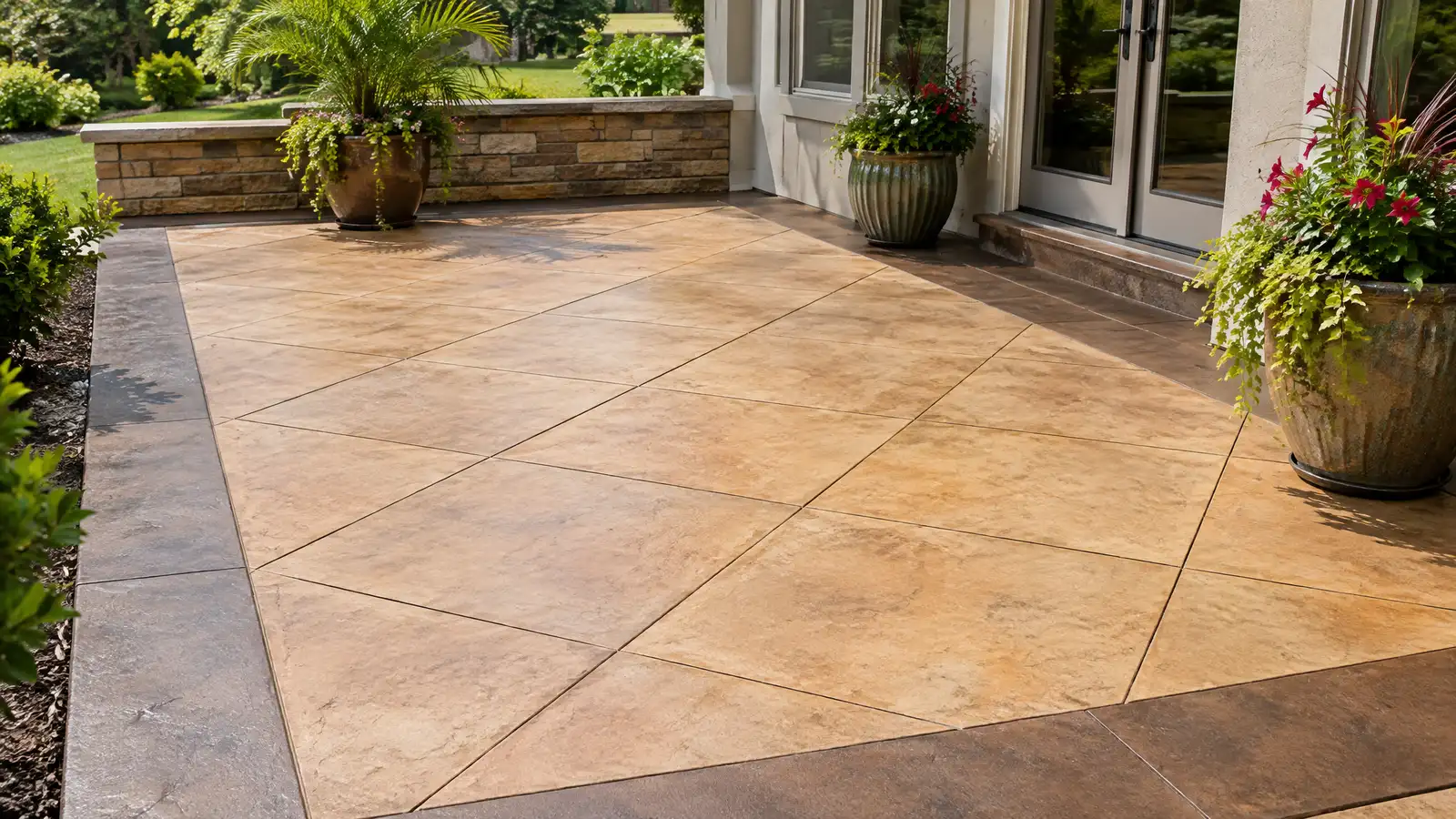 Decorative and Colored ConcreteColored, stained, exposed aggregate and saw-cut concrete patios and walks that dress up a durable slab with texture…Explore
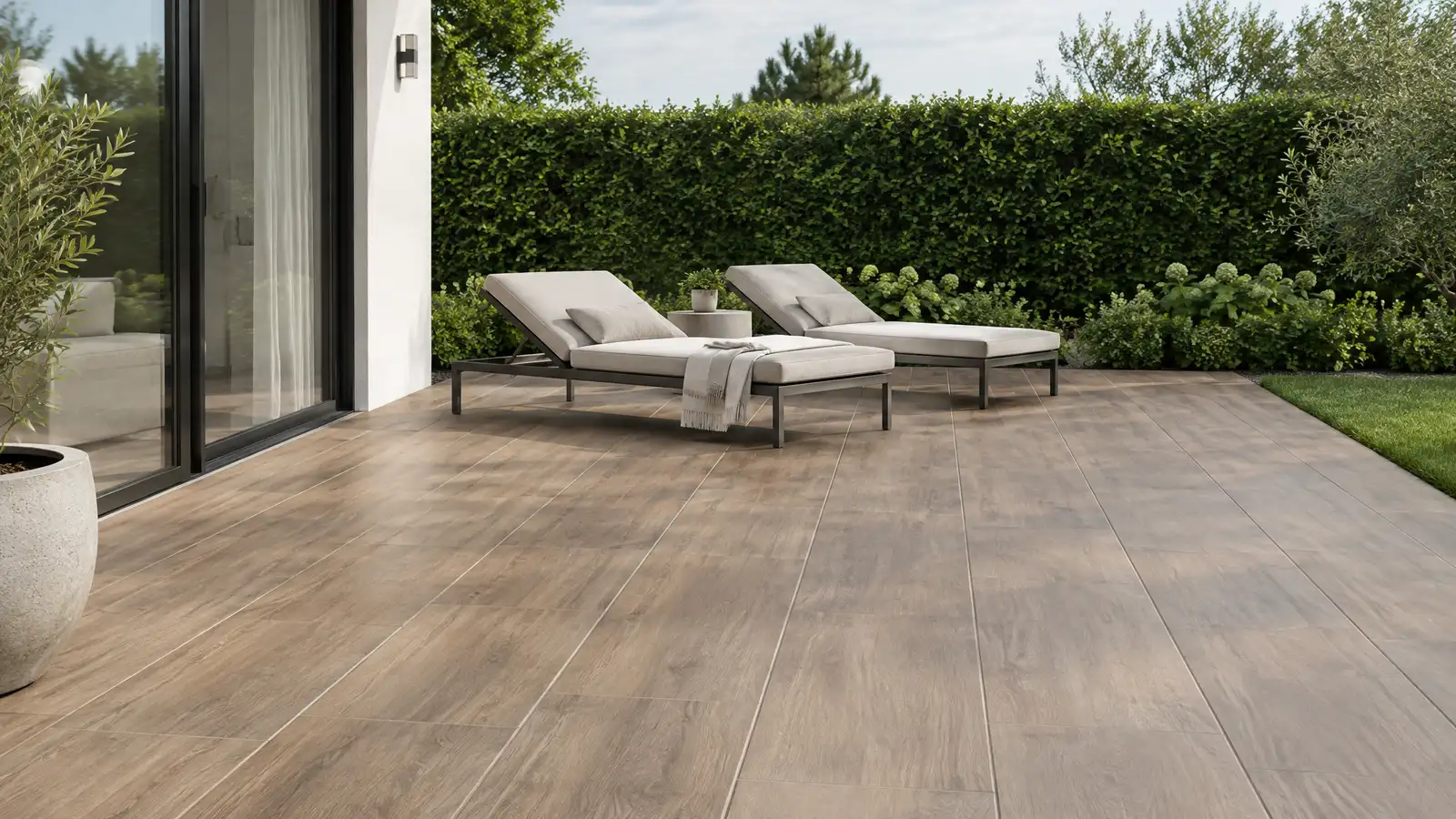 Tile and Porcelain PatiosOutdoor porcelain and tile patios with a clean, modern look, low upkeep and surfaces that stay cooler and…Explore
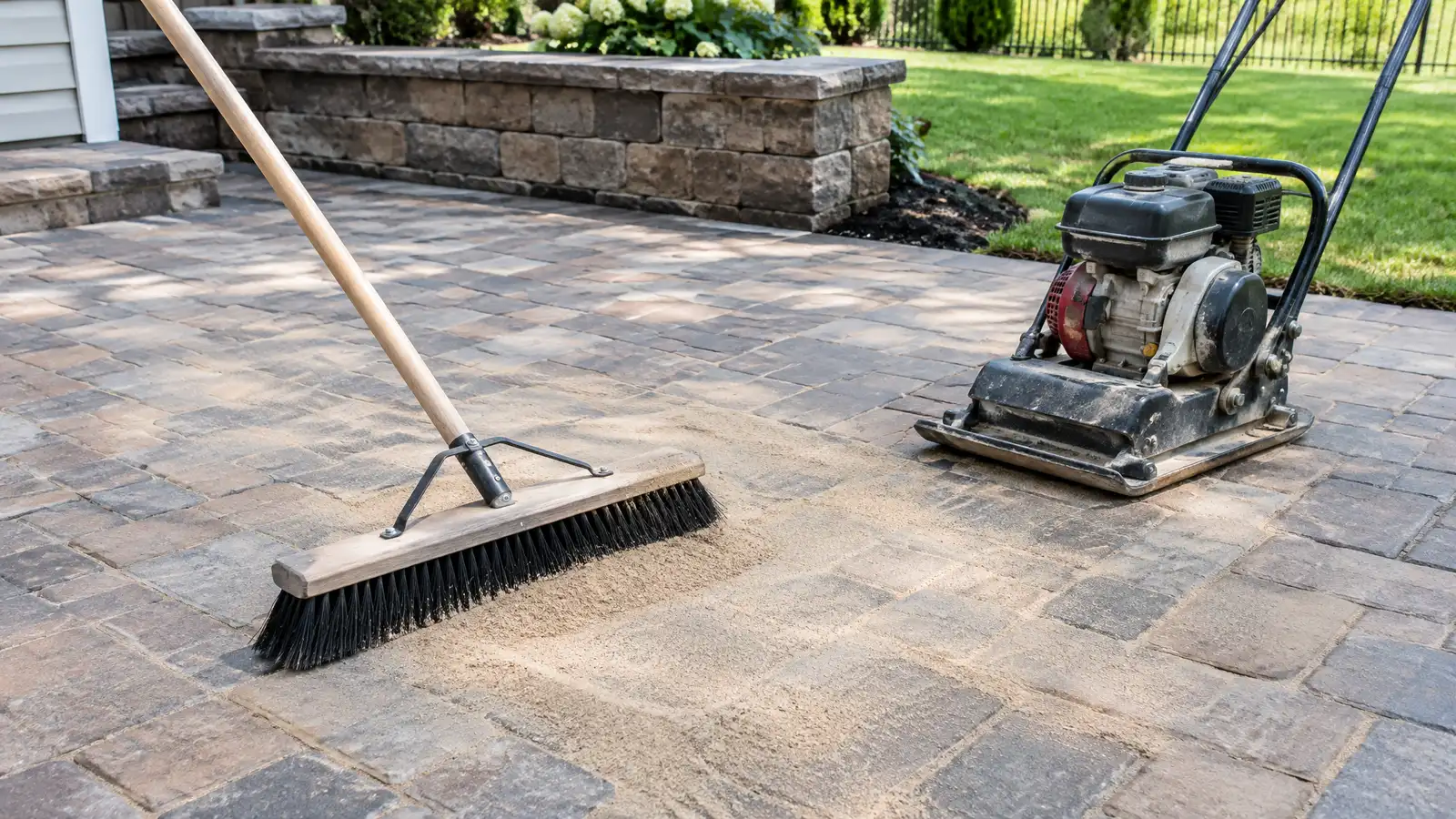 Patio Sealing and Joint SandingSealing and re-sanding that protects pavers and stone from stains, weeds and weather and brings back their color.Explore
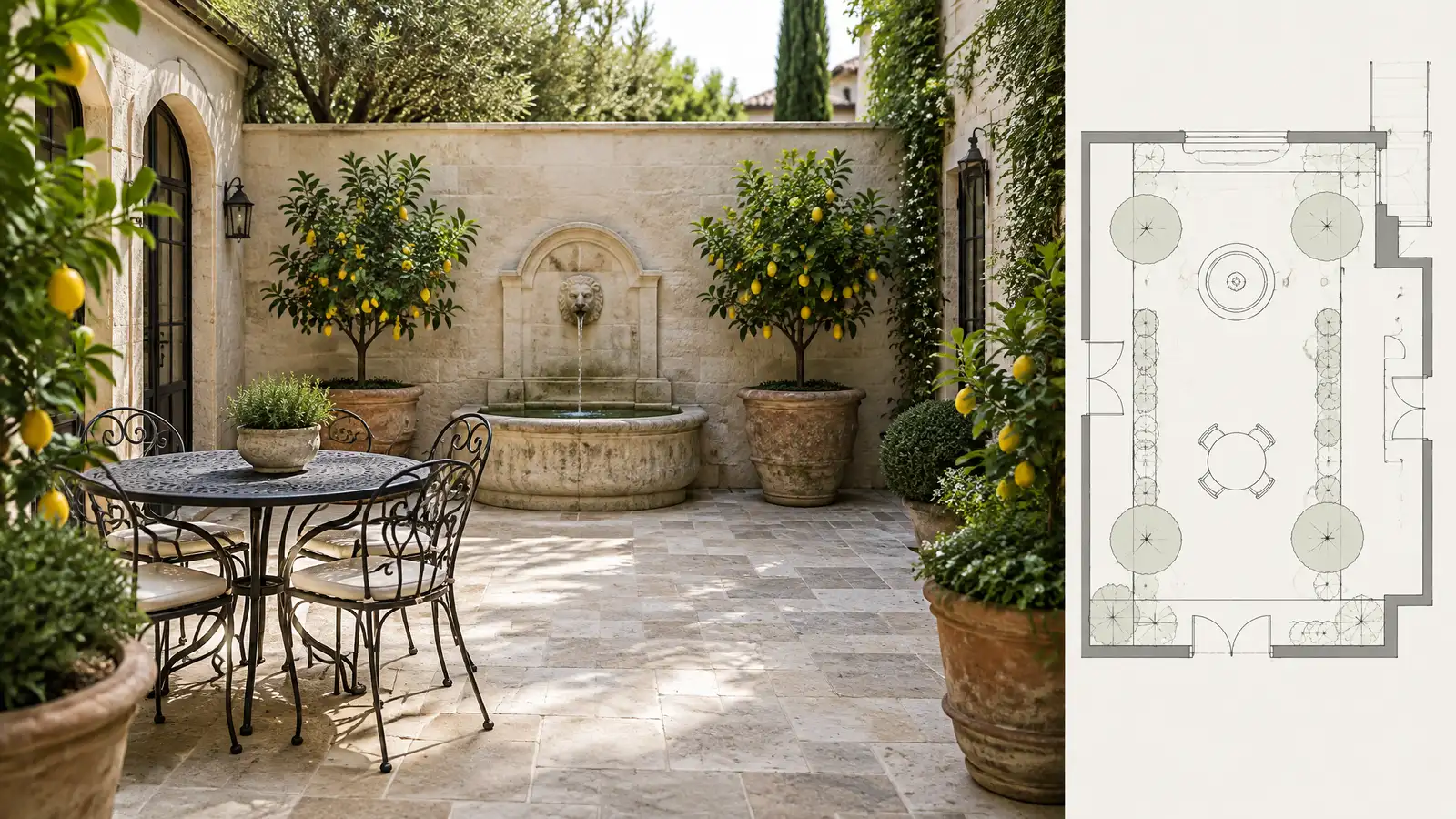 Courtyards and TerracesWalled courtyards, stepped terraces and garden rooms that turn small, sloped or tight spaces into usable outdoor rooms.Explore
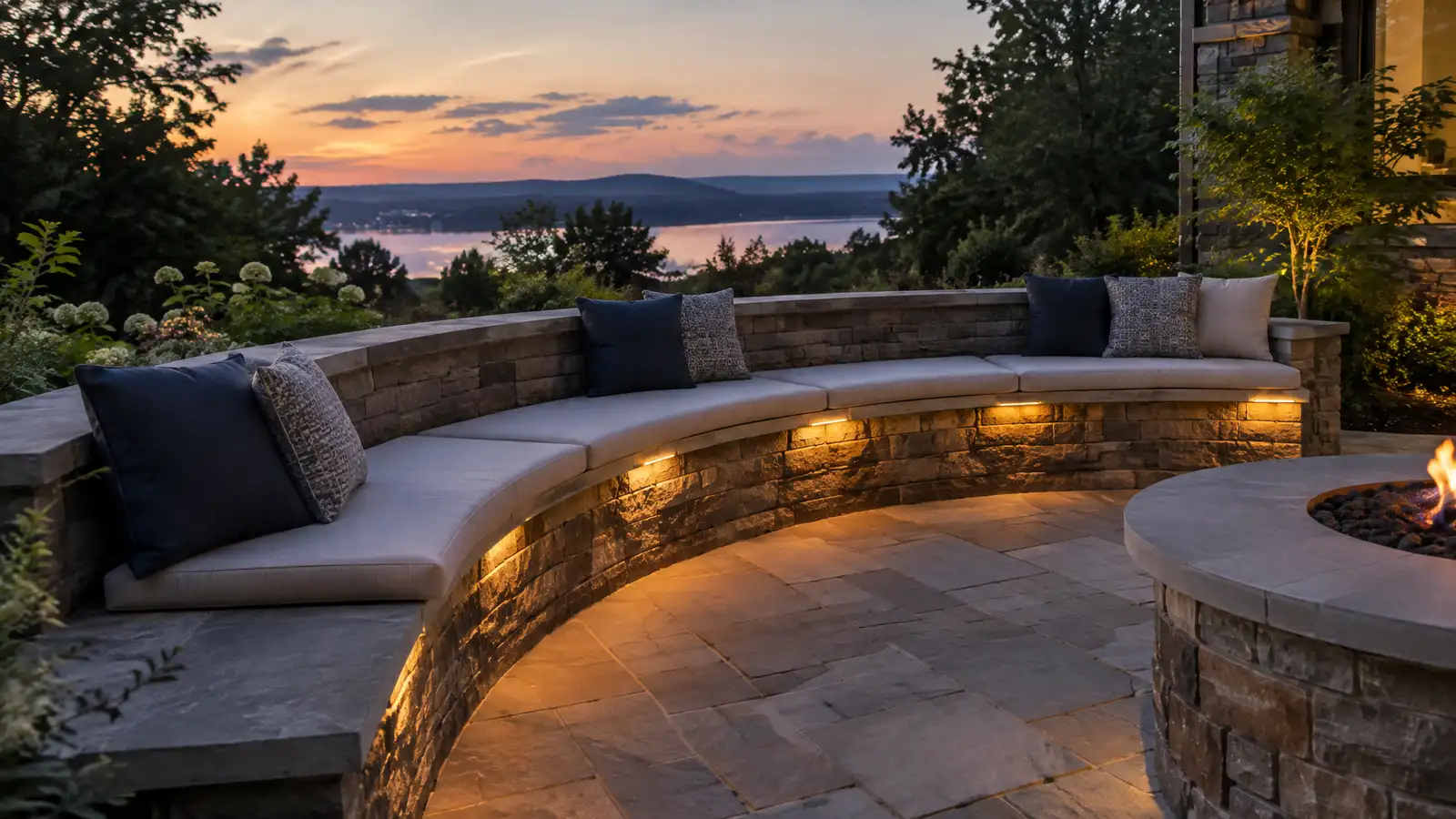 Seat Walls and Garden WallsLow walls in stone, block and brick that add seating, edge patios, hold raised beds and give gardens…Explore
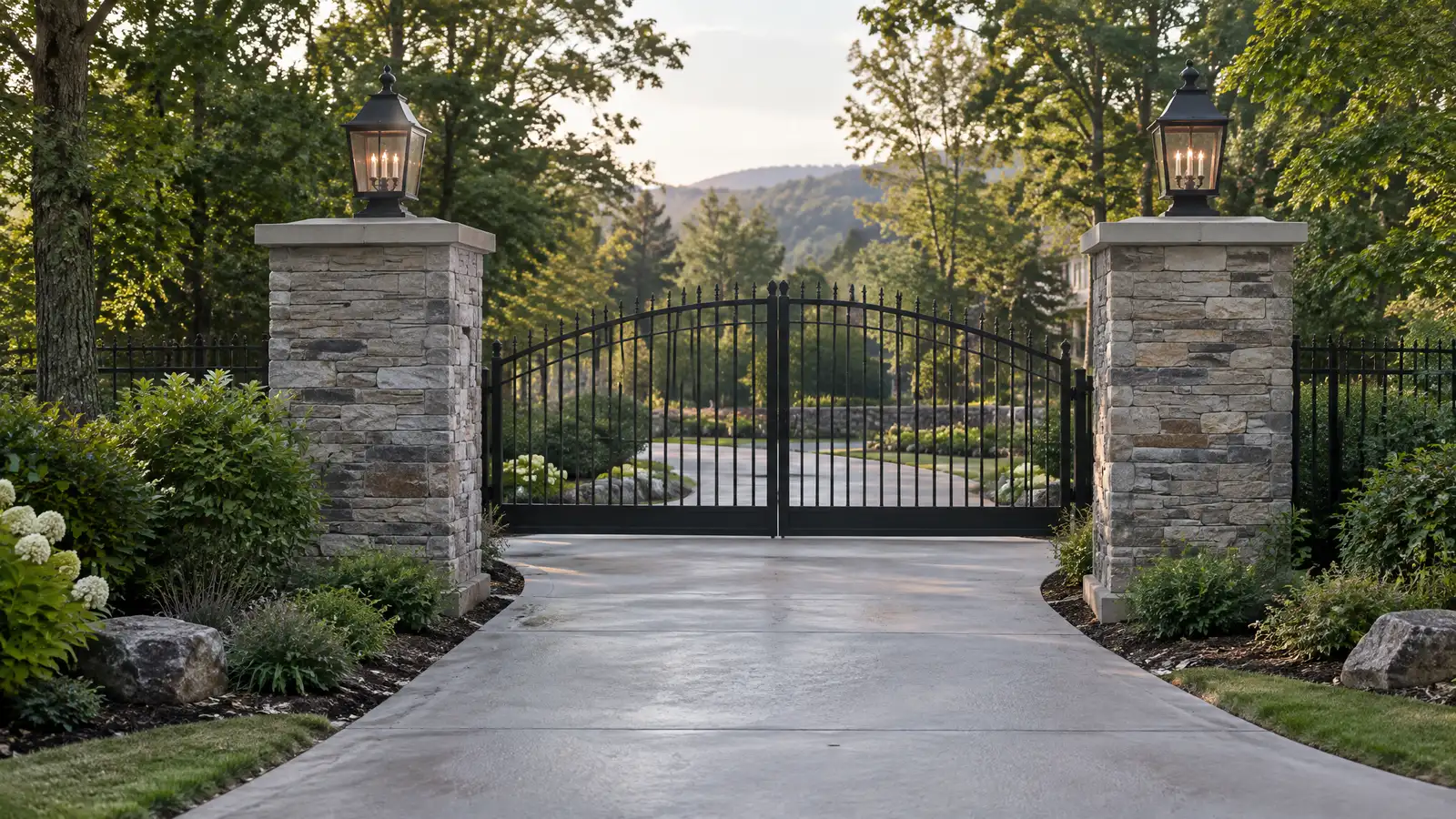 Stone Veneer and ColumnsStone and brick veneer on columns, pillars, fireplaces and kitchen bases that gives structures a solid, natural look.Explore
Pick a material, size a job or ballpark a budget.
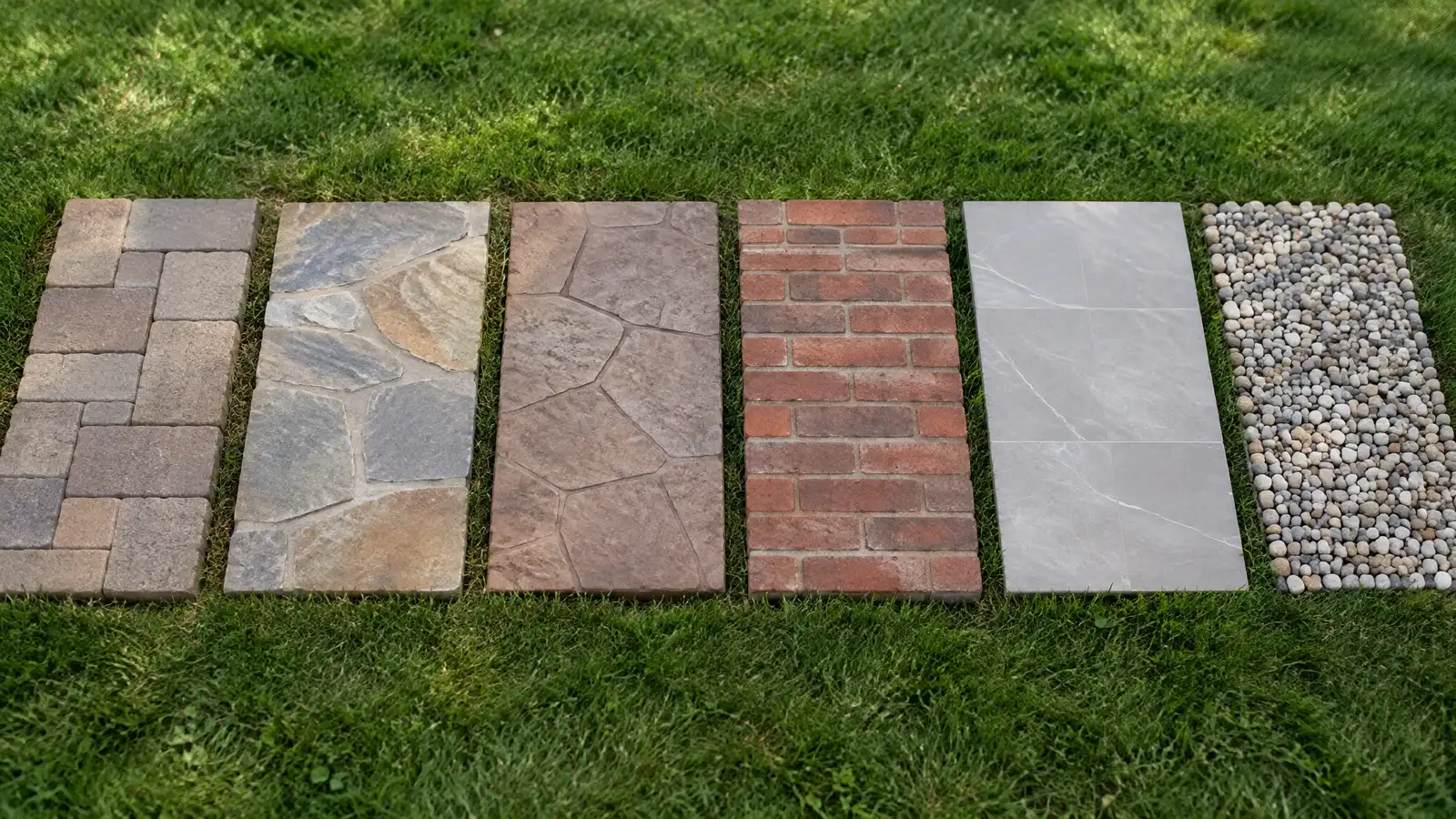 Patio Material Picker QuizAnswer a few questions about looks, upkeep, drainage, kids, pets and budget focus to see which patio materials usually fit.Try it
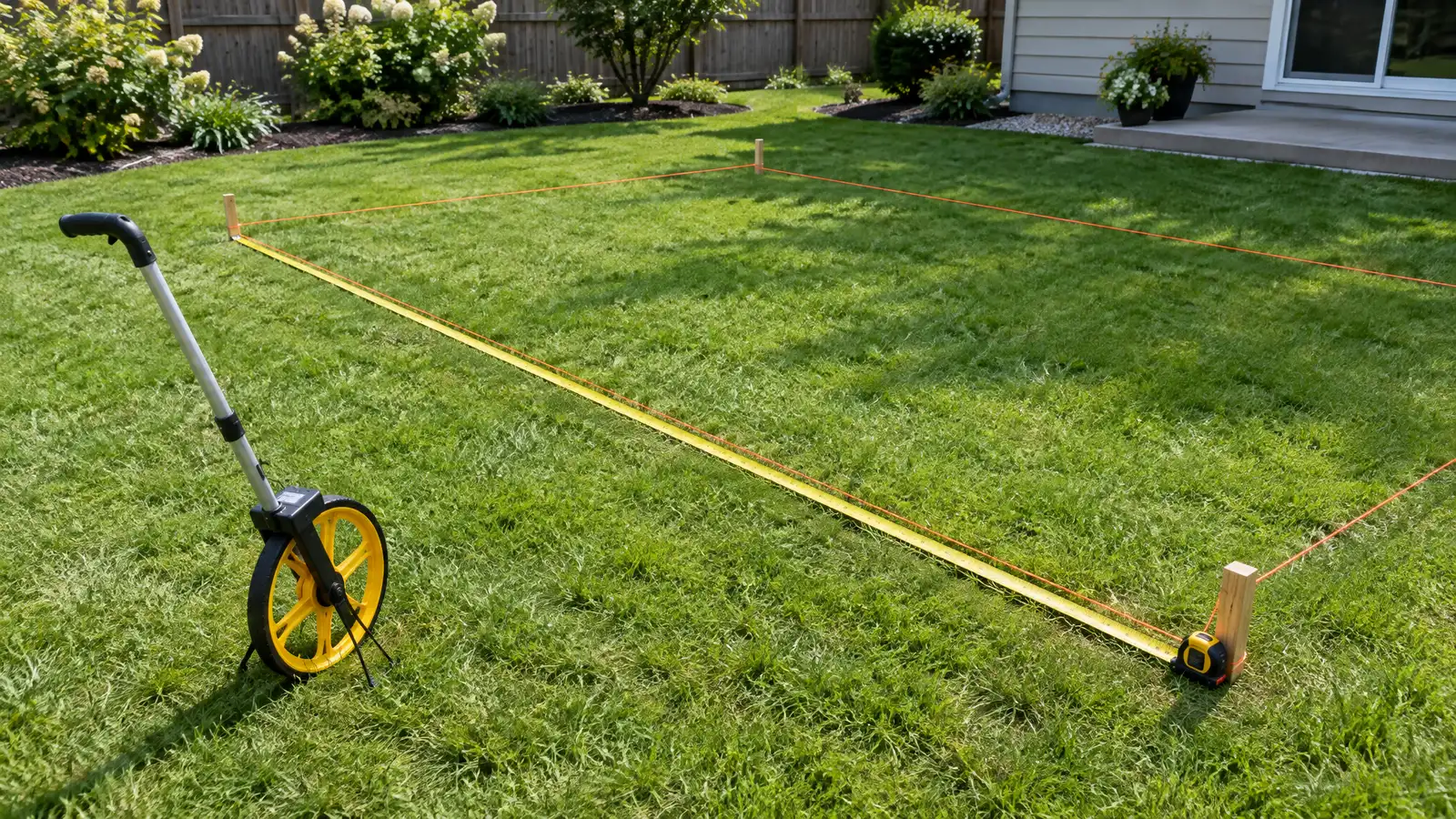 Patio Size and Materials CalculatorEnter your measurements to see square feet, pavers, base stone, sand, concrete, deck boards or wall block to plan for.Try it
 Patio and Outdoor Living Budget PlannerPick a patio, deck, kitchen, fire pit, wall or lighting job, set the size and add extras to see a ballpark planning range. Placeholder values only.Try it
It depends on soil and use. Patios commonly use several inches of compacted stone, and driveways use more.
A weak base, poor compaction and water under the surface are common causes.
Sometimes, if the slab is sound and drains well. We inspect first.
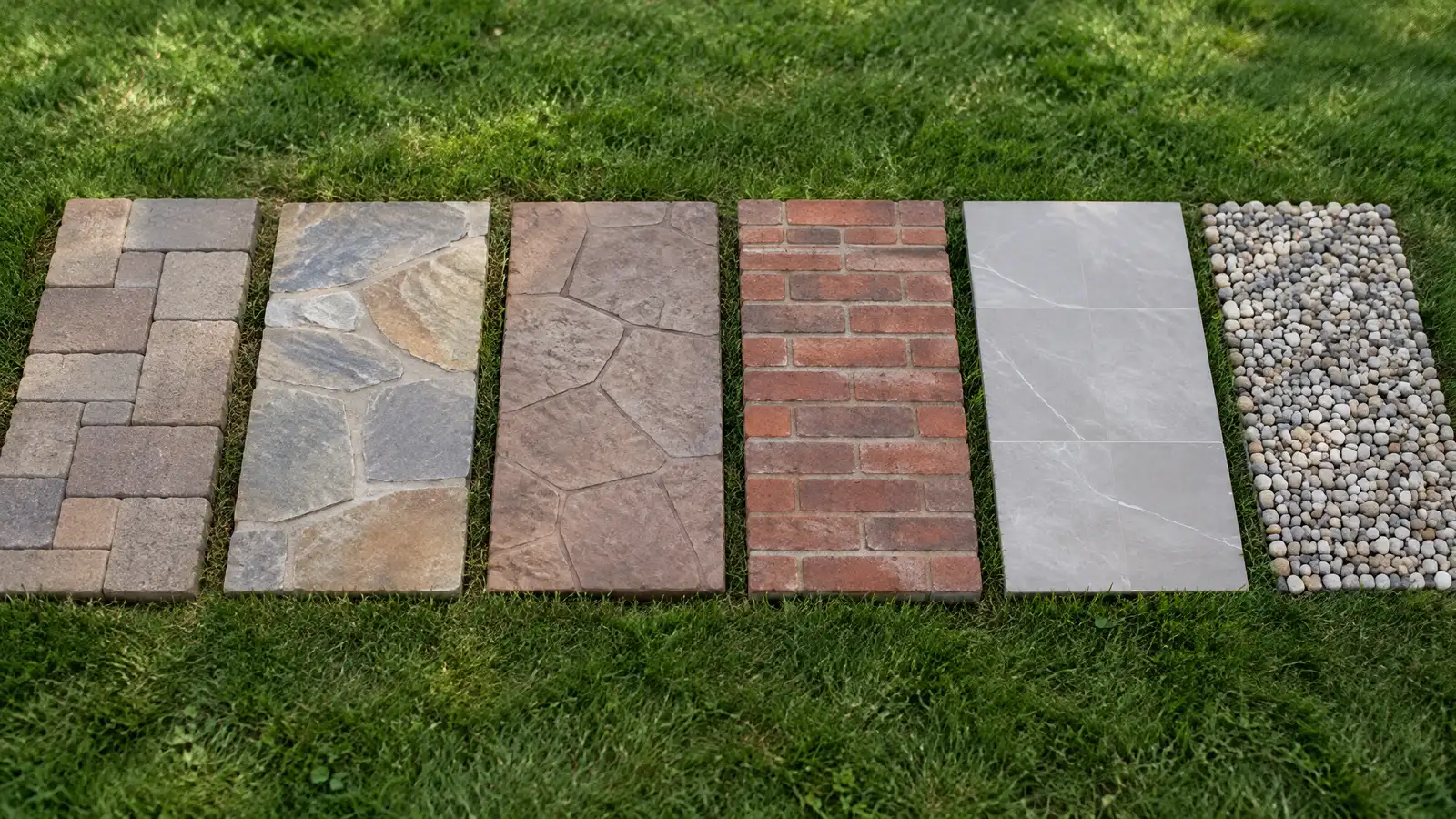 Comparison guidePatio MaterialsHow pavers, poured concrete, stamped concrete, natural stone, brick, tile and gravel differ in look, comfort, upkeep and…Learn more
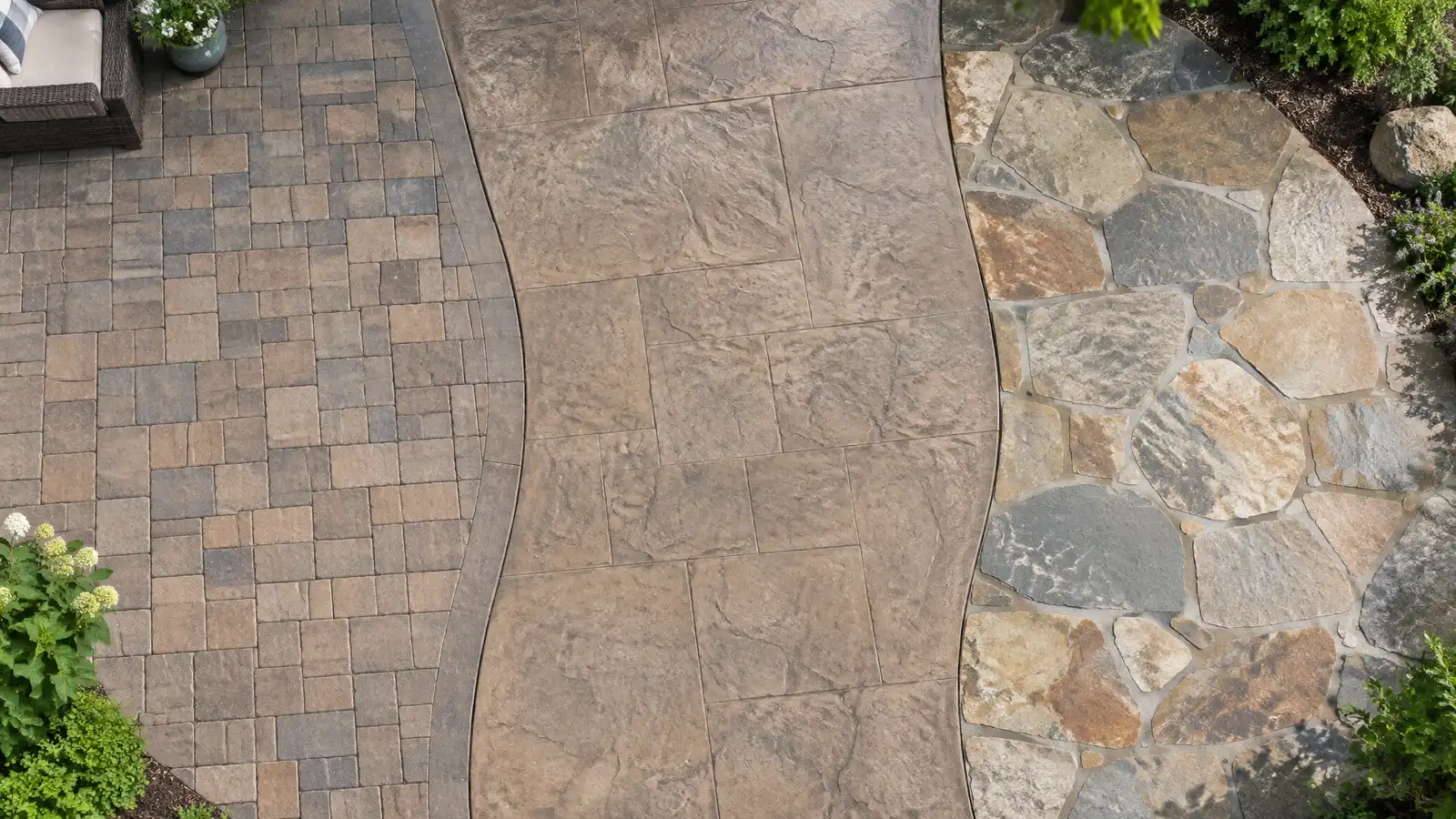 Comparison guidePavers vs Stamped vs StoneA side-by-side look at three popular patio surfaces: interlocking pavers, stamped concrete and natural stone.Learn more
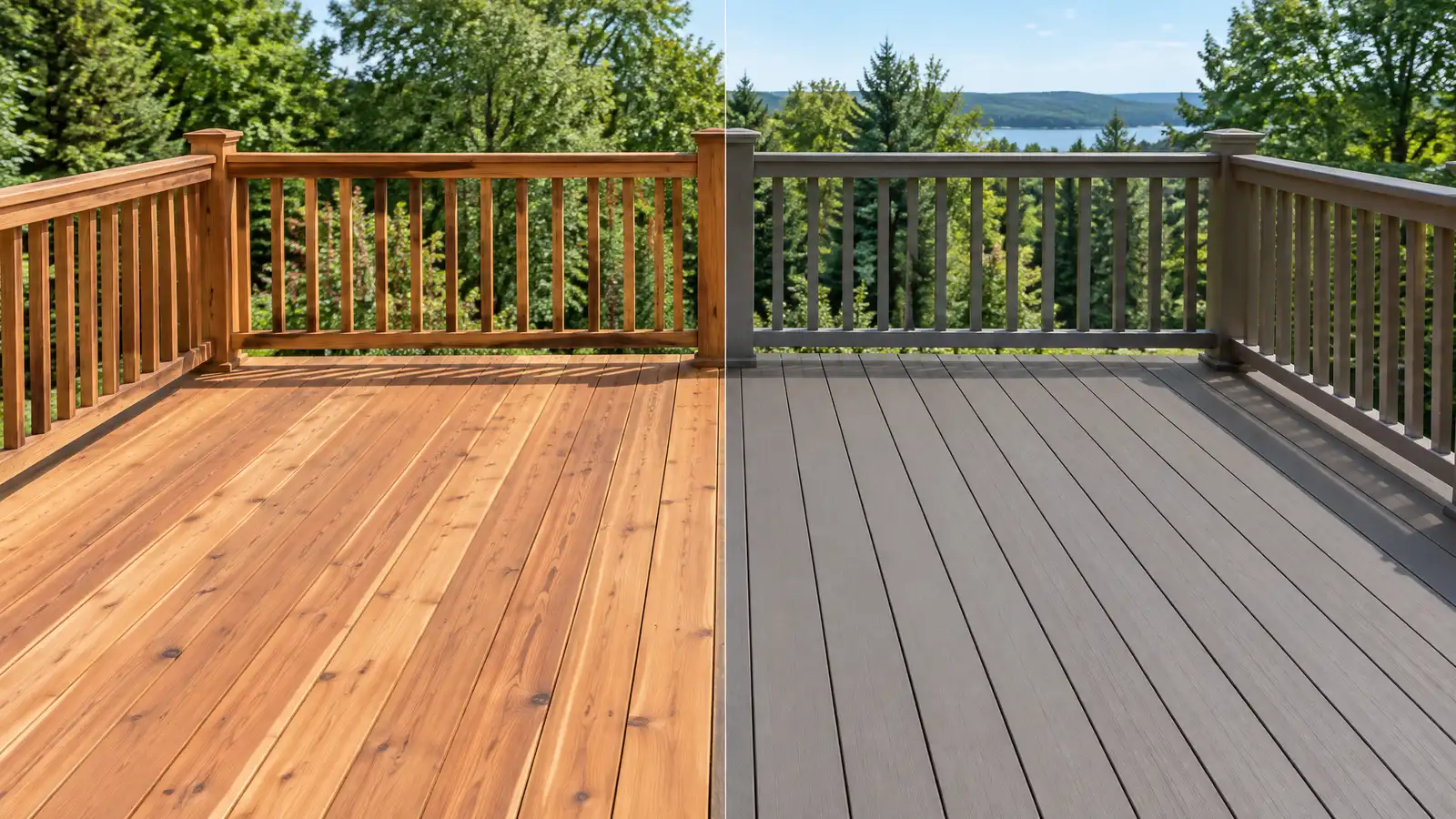 Comparison guideWood vs Composite DeckingHow pressure-treated wood, cedar, hardwood and composite decking differ in look, upkeep, heat and lifespan.Learn more
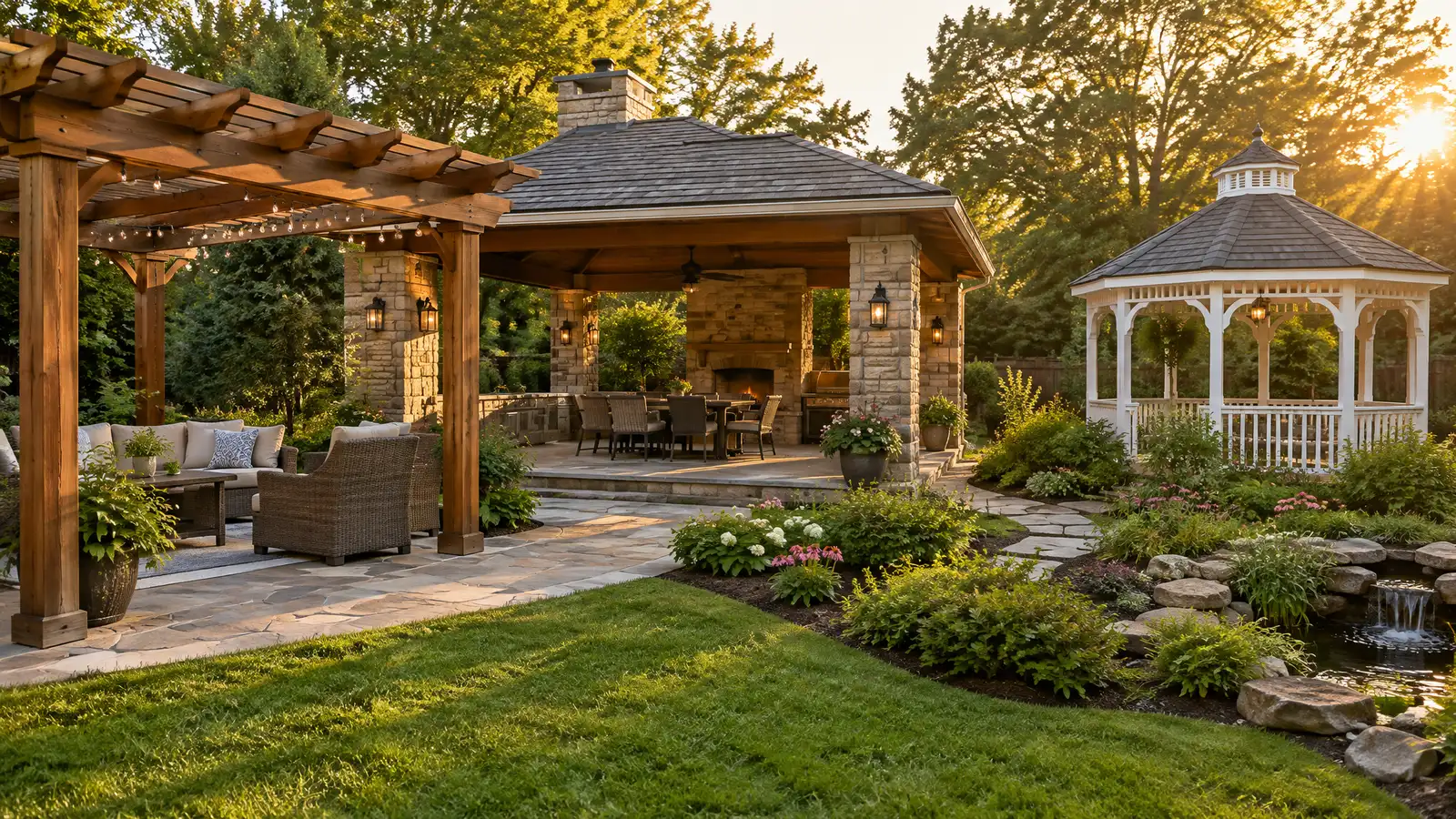 Comparison guidePergolas, Pavilions and GazebosHow pergolas, pavilions, gazebos, covered patios and louvered roofs differ in shade, rain protection, structure and style.Learn more
Call and describe your yard and what you would love to do outside. A designer will listen, talk through the options and give you a clear written estimate.