Look at your yard
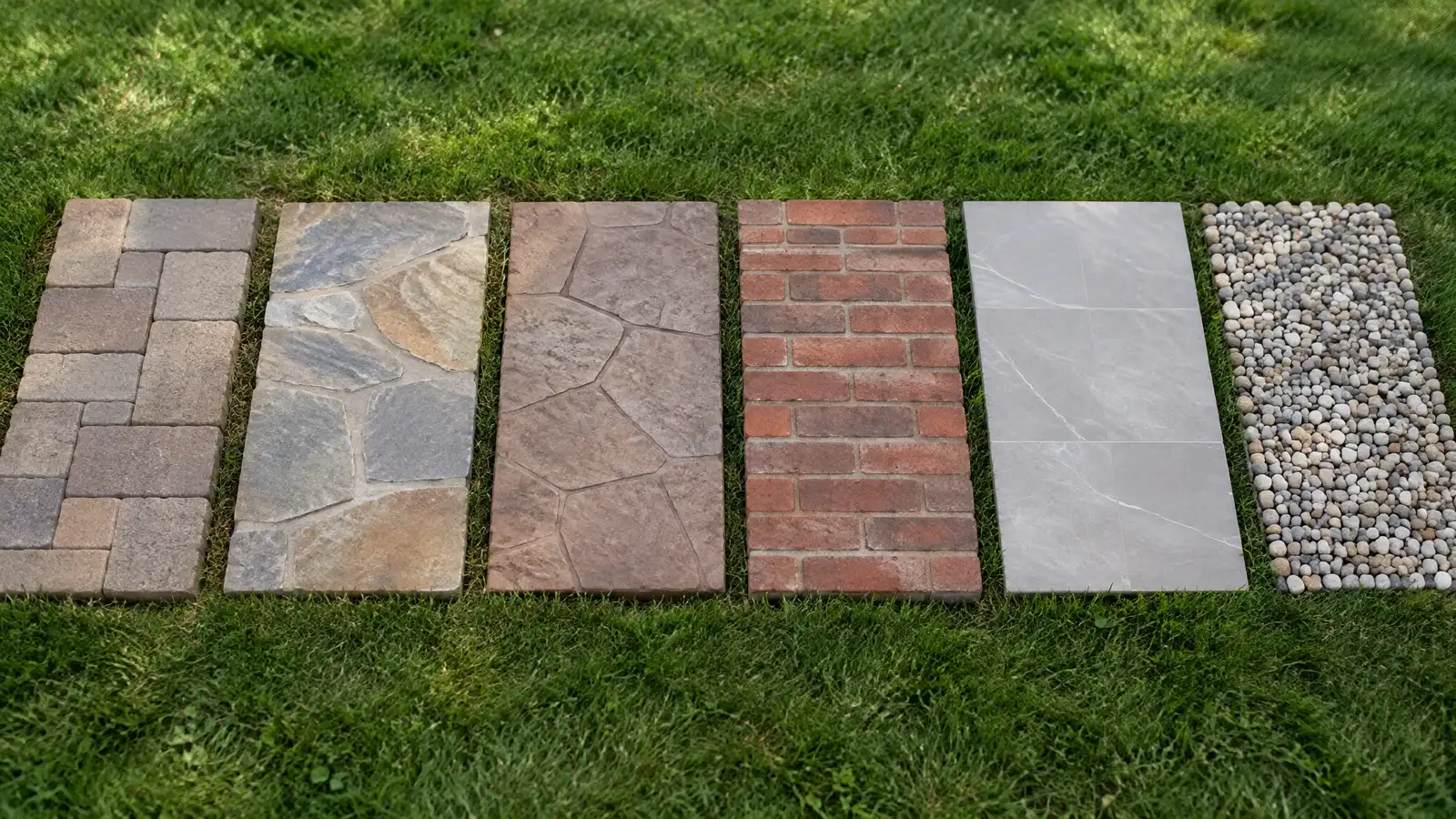
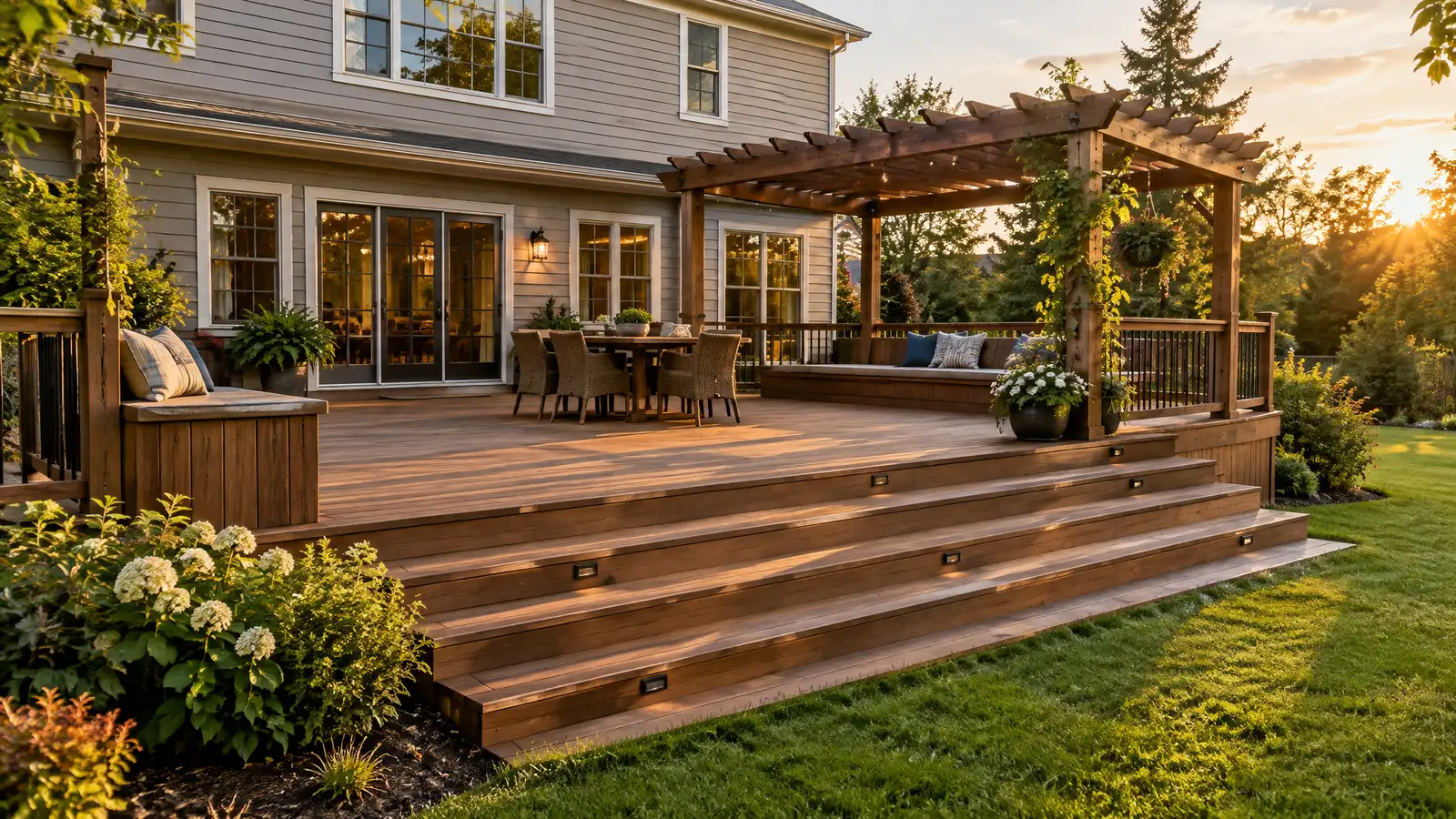
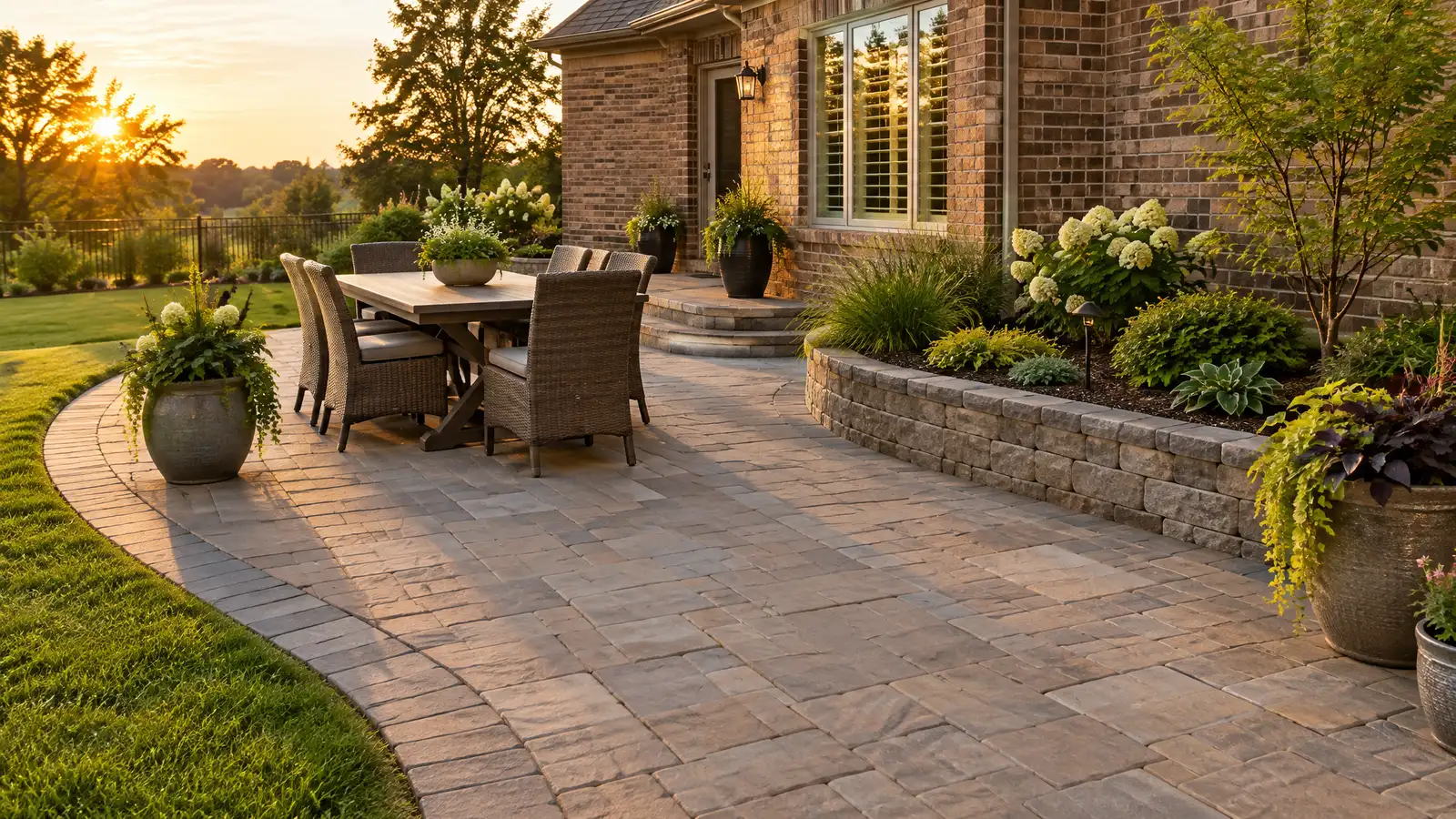
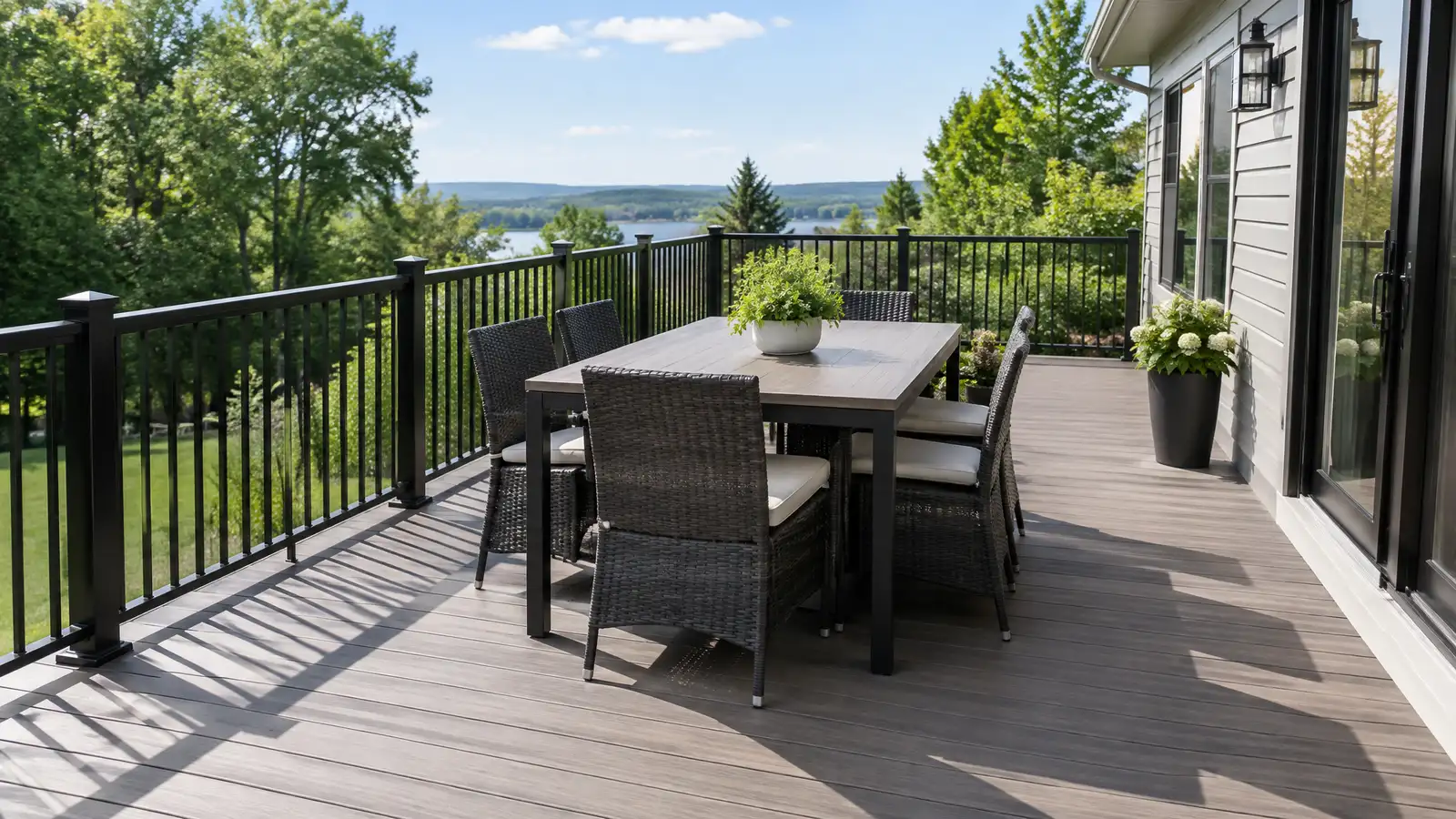
A patio sits on the ground and suits flat or gently sloped yards. A deck is raised and suits second-story doors, steep slopes and views.
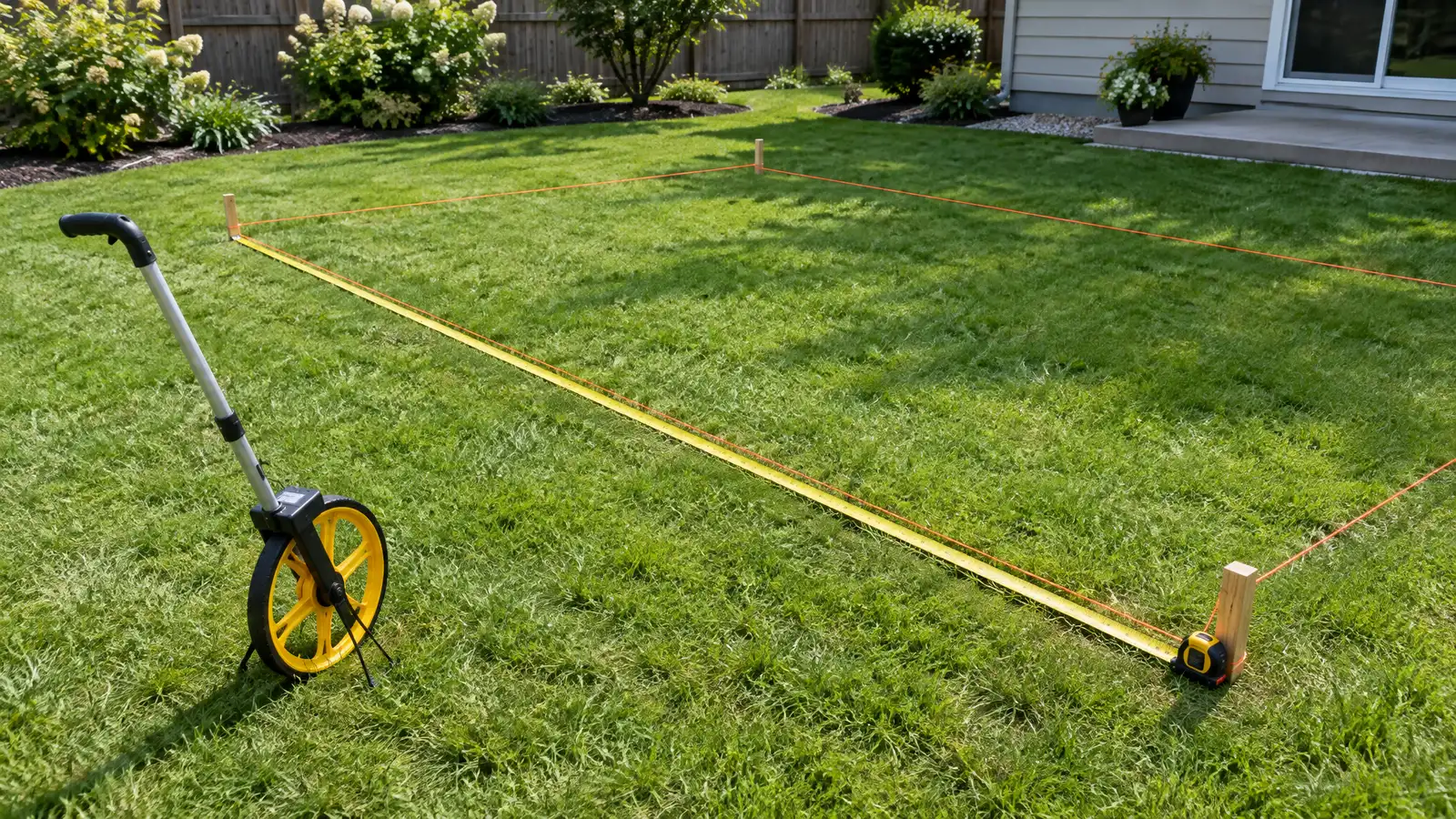
Check the height of the door from the ground.
Measure the height from the door threshold to the ground. A drop of more than a step or two usually points to a deck or a terrace.
Think about use
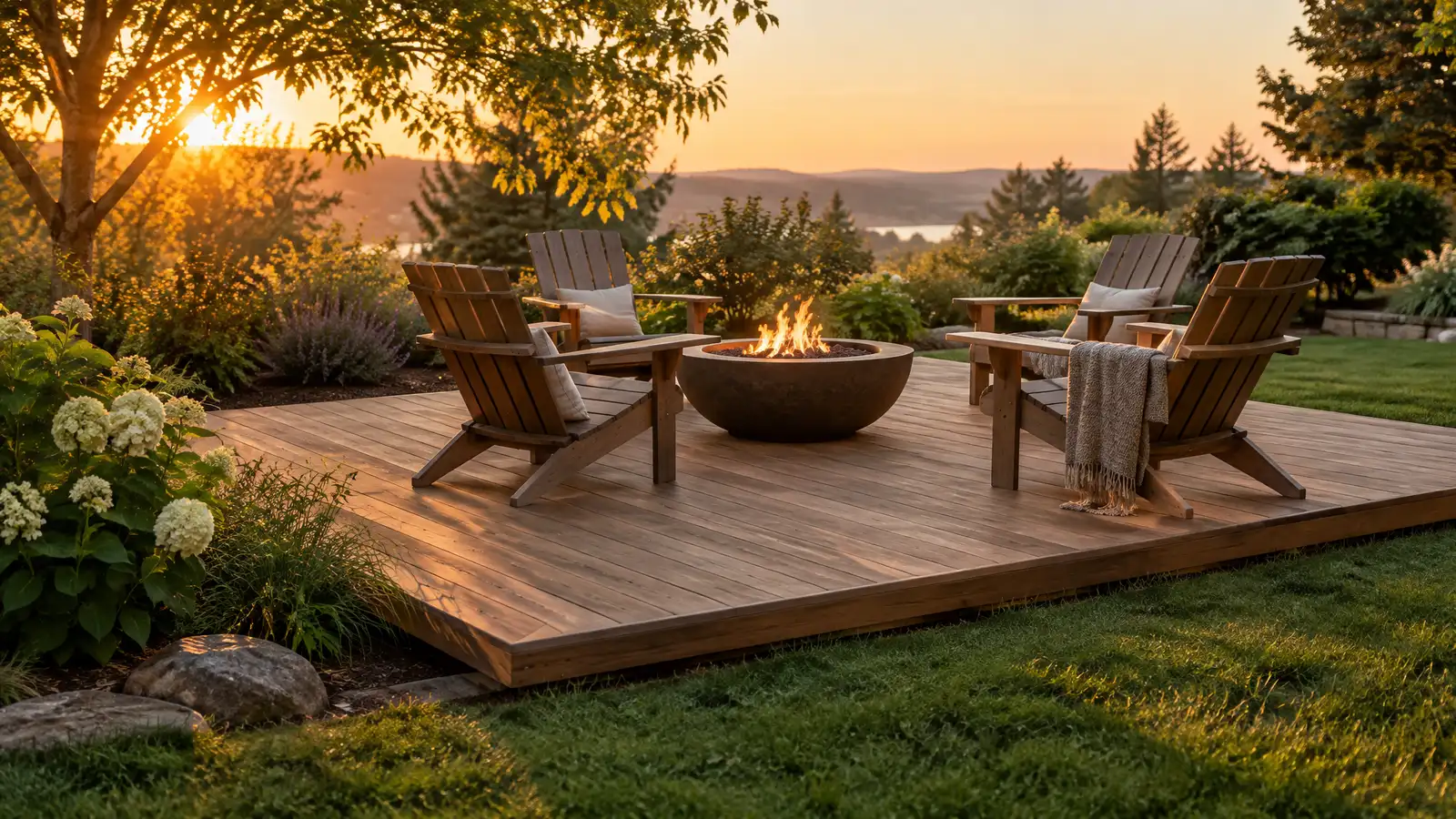
Patios handle heavy furniture, fire pits and kitchens well. Decks feel warm underfoot and can be built over uneven ground.
Both can host dining and lounging.
Think about the furniture. Heavy items such as fire pits and kitchen islands are easier to support on a patio.
Upkeep
Wood decks need staining or sealing, composite decks need cleaning and patios need joint sand and sealing. Both need regular sweeping.
Think about how much time you want to spend on care.
Ask for a care sheet for each surface so you can compare how much time and effort each needs.
Weather and drainage
Patios need a good base and drainage, and decks need good airflow underneath. Both need to handle Tennessee rain and freeze and thaw.
Slopes and walls can add complexity.
Look under existing decks for moisture and dark wood, and check drainage around patios. These clues help you decide what to keep.
Combine them
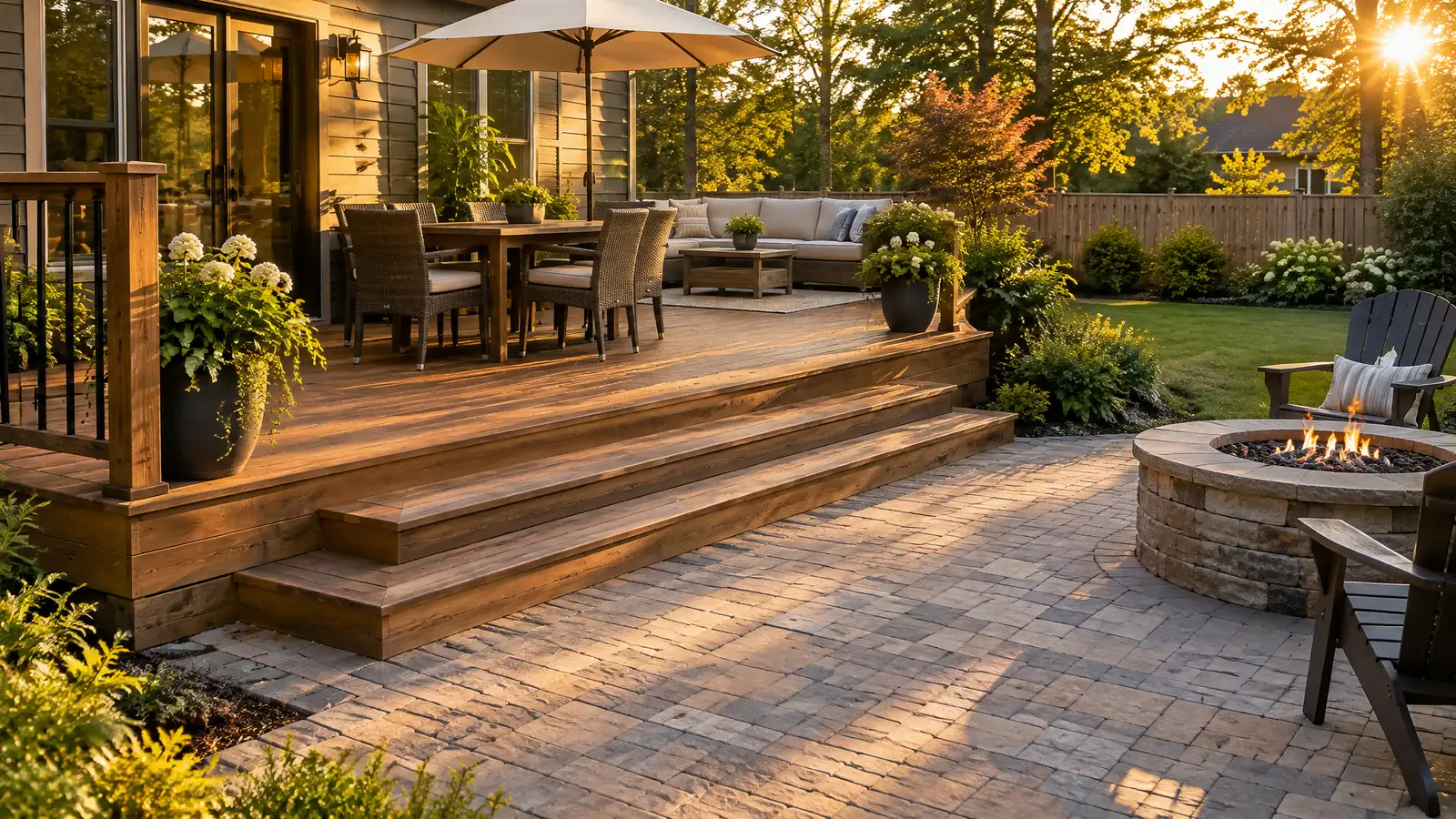
Many yards use a deck at the house and a patio below it. A transition with steps and a landing links them.
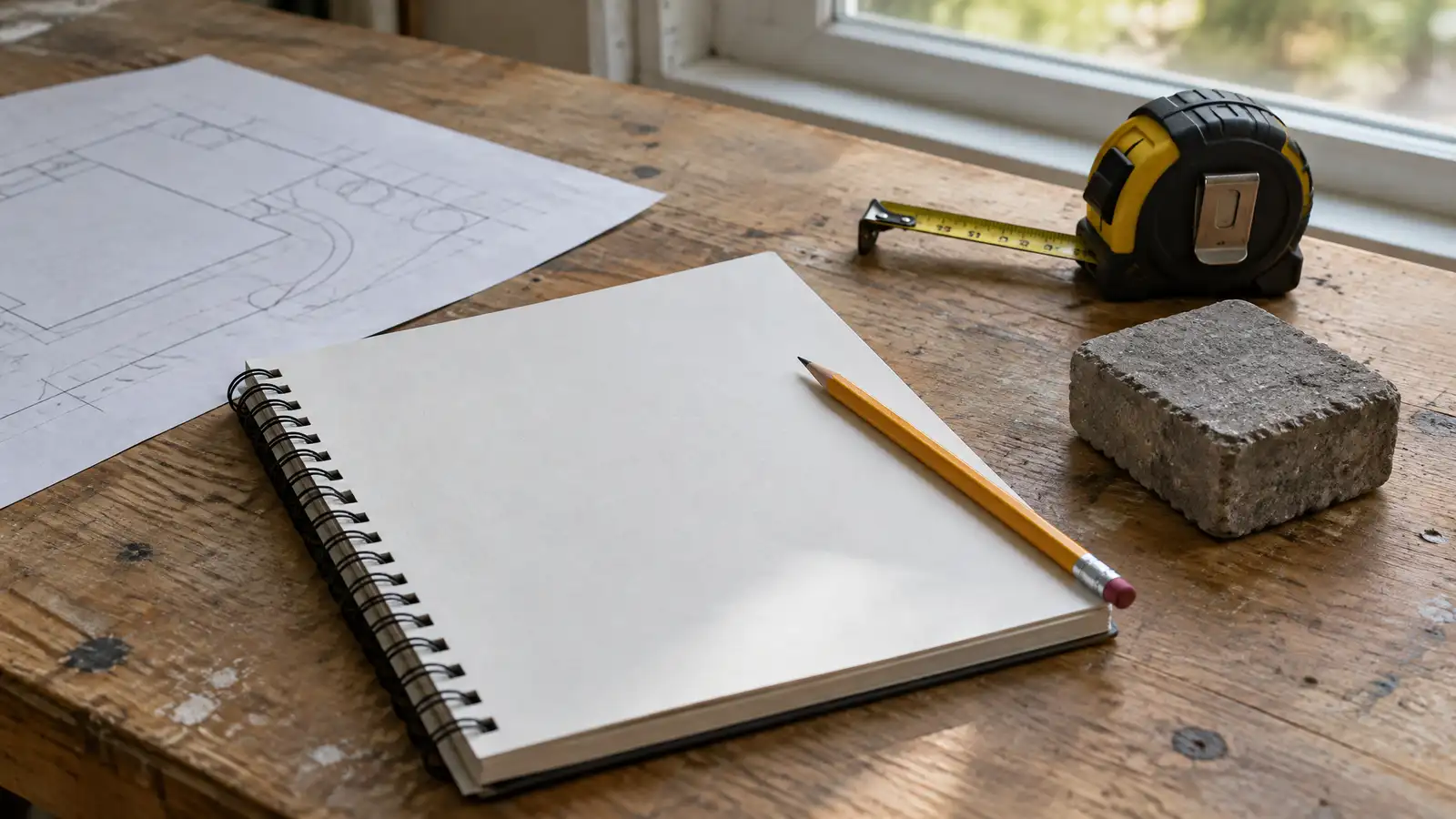
A plan helps both spaces work together.
Combining spaces often gives the most flexibility, with a deck for dining and a patio for fire and lounging.
Choose a deck when the ground is far below the door, and a patio when it is close.